
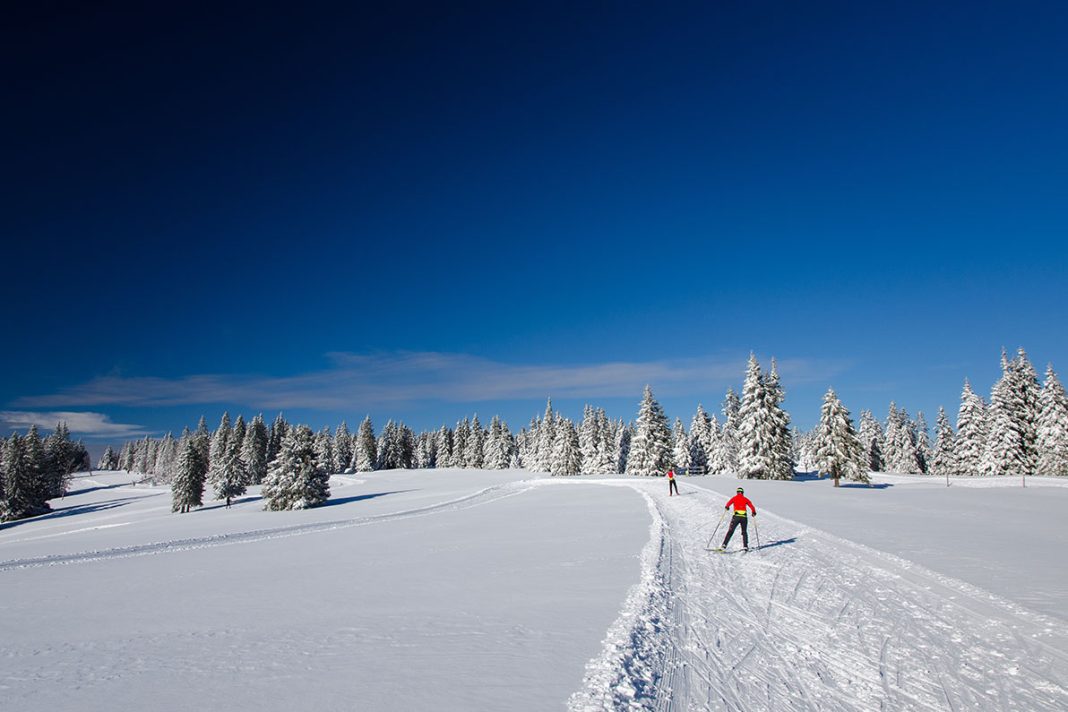
Croatian tourism company Hadria is set to acquire a 50% stake in Vabo, the Slovenian company operating the Kope ski resort, through a recapitalisation that will bring the two businesses together as strategic partners.
Vabo CEO and co-owner Boštjan Paradiž confirmed Hadria’s entry into the company, describing the partnership as an opportunity to combine the strengths of coastal and mountain tourism. Based in Novalja on the Croatian island of Pag, Hadria operates several tourism facilities, including the Straško and Omišalj campsites, and generates approximately one million overnight stays annually. Paradiž said the partnership would support further development of Kope’s infrastructure and other tourism projects in Slovenia.
The potential acquisition of Krvavec remains unconfirmed. Paradiž acknowledged that discussions were taking place but declined to provide details, while previously telling Slovenian business outlet Finance that negotiations were under way and that an agreement could be reached early next year. Unofficial estimates cited by the outlet put the potential purchase price for the entire resort at between €8 million and €10 million. Meanwhile, Kope and Krvavec have agreed to introduce a joint ski pass for the 2026/2027 winter season, allowing visitors to access both resorts with one ticket.
Vabo has operated Kope, located on the western side of the Pohorje Massif, since 2015, gradually transforming it into a year-round destination through investments in ski lifts, snowmaking systems and accommodation. Its latest investment cycle, valued at approximately €43 million over five years, includes the conversion of a mountain lodge into a four-star hotel with a spa. The company is also preparing to open what it describes as the region’s first five-star campsite for camper vans.
The investment reflects Vabo’s growing position in Slovenia’s tourism sector. The company, which provides approximately 650 accommodation beds in the Koroška region, recorded €10.6 million in sales revenue last year, up 19% year on year, alongside EBITDA of €3.37 million and net profit of €368,000. Despite ongoing renovation work, it generated more than 72,000 overnight stays. Krvavec, meanwhile, reported €5.76 million in revenue and a net profit of almost €21,500 last year.
The partnership between Hadria and Vabo is expected to create opportunities for cooperation between Croatia’s established coastal tourism market and Slovenia’s mountain destinations, while the possible expansion into Krvavec could further strengthen Vabo’s presence in the country’s ski tourism sector.