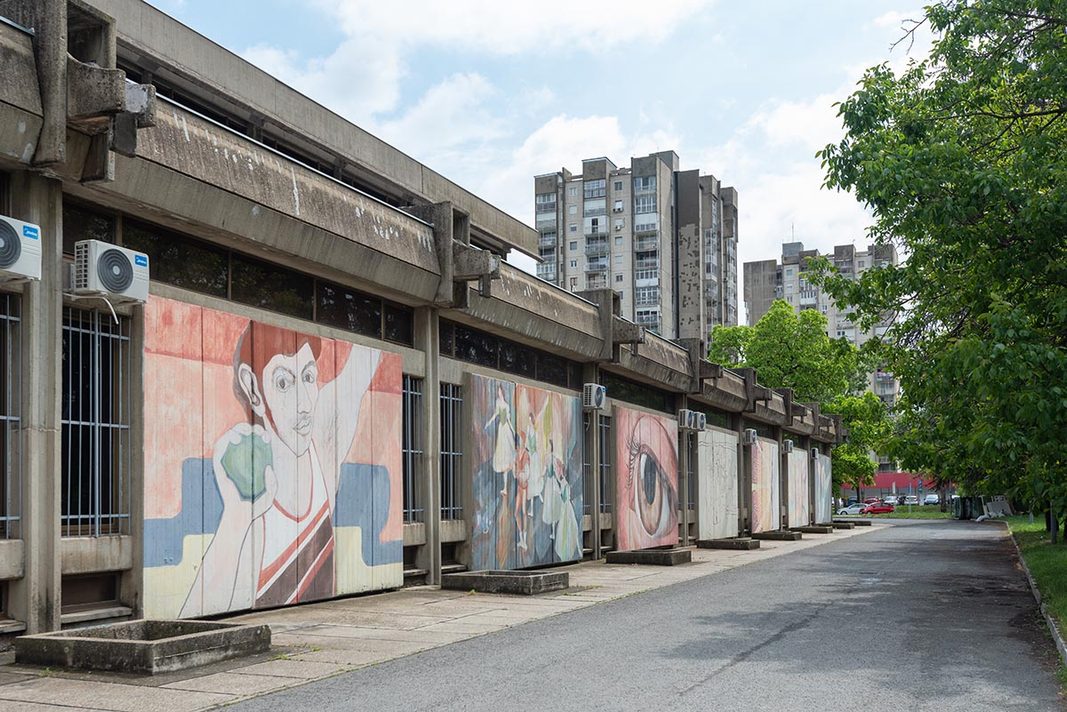
One of the areas affected by the expansion is Block 45, where plans for new construction are emerging alongside major changes to the Sava riverfront. The broader development zone includes residential, commercial and infrastructure projects, adding new pressure to one of New Belgrade’s already densely populated areas.
A major planned project near the Sava embankment involves a residential-business complex with 532 apartments and 21 commercial units. The development is planned in eight separate sections, with two underground levels, a ground floor, six upper floors and a recessed additional floor. A kindergarten facility is also included in the plans, while the complex would have a total gross floor area of more than 78,000 square metres.
The transformation is taking place as Belgrade prepares for EXPO 2027, with the exhibition complex being built in Surčin and the wider plans extending into surrounding parts of the capital. Earlier phases of the development plan have included accommodation, commercial facilities, a large thematic park and new transport infrastructure, including facilities for water-based public transport on the Sava.
At the same time, the expansion of development towards New Belgrade has generated debate over urban planning, green areas and the future of the Sava riverfront. Recent planning documents envisage hundreds of thousands of square metres of new residential and commercial space on the left bank of the Sava, including buildings reaching between 85 and 100 metres in height in certain areas.
The changes are therefore set to go beyond the construction of individual residential buildings.
They form part of a broader transformation of western and riverside Belgrade, with EXPO 2027 acting as a catalyst for new housing, commercial development and transport links. The challenge for the city will be to accommodate this expansion while maintaining infrastructure, public services and the urban character of existing neighbourhoods.
In Serbia, projects connected to EXPO 2027 and other major construction initiatives have also become closely intertwined with the country’s political debate. Years of political tensions and growing public dissatisfaction, particularly following the collapse of the Novi Sad railway station canopy in 2024, have contributed to increased scrutiny of major state-backed projects and questions over transparency, accountability and the relationship between political power and development.
The authorities have defended the EXPO-related construction programme as an important opportunity for Serbia’s economic and infrastructural development, while critics have questioned aspects of the projects and their implementation.
This makes the expansion towards New Belgrade part of a much broader debate: whether Serbia can pursue large-scale urban development while maintaining a clear separation between political interests and long-term public infrastructure. The issue is particularly relevant as Serbia prepares for snap parliamentary elections on October 25, 2026, after the government requested the dissolution of parliament amid prolonged political tensions and months of protests.
The election will provide another indication of the public mood towards the current political leadership and its broader development agenda, although individual construction projects are only one of many issues shaping the campaign.