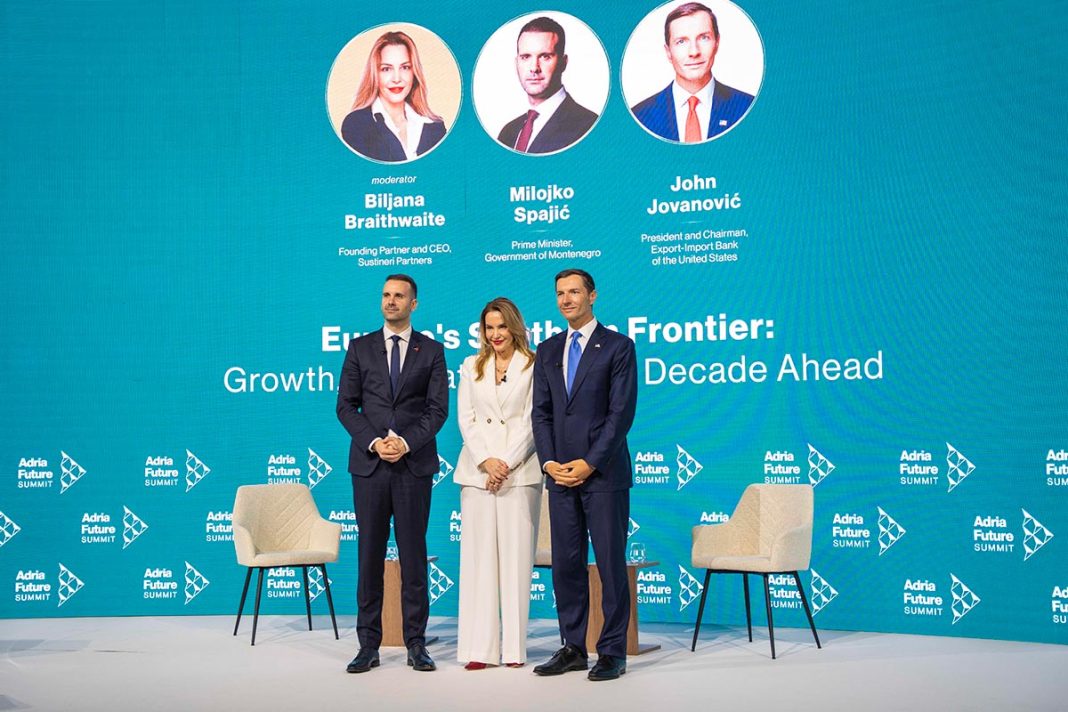
With more than 70 sessions and a high-level lineup including Milojko Spajić, Mohamed Alabbar, Annette Kroeber-Riel, Cherie Blair and Manfredi Lefebvre d’Ovidio, the summit underscored a clear message: the region must act decisively in a more demanding global environment.
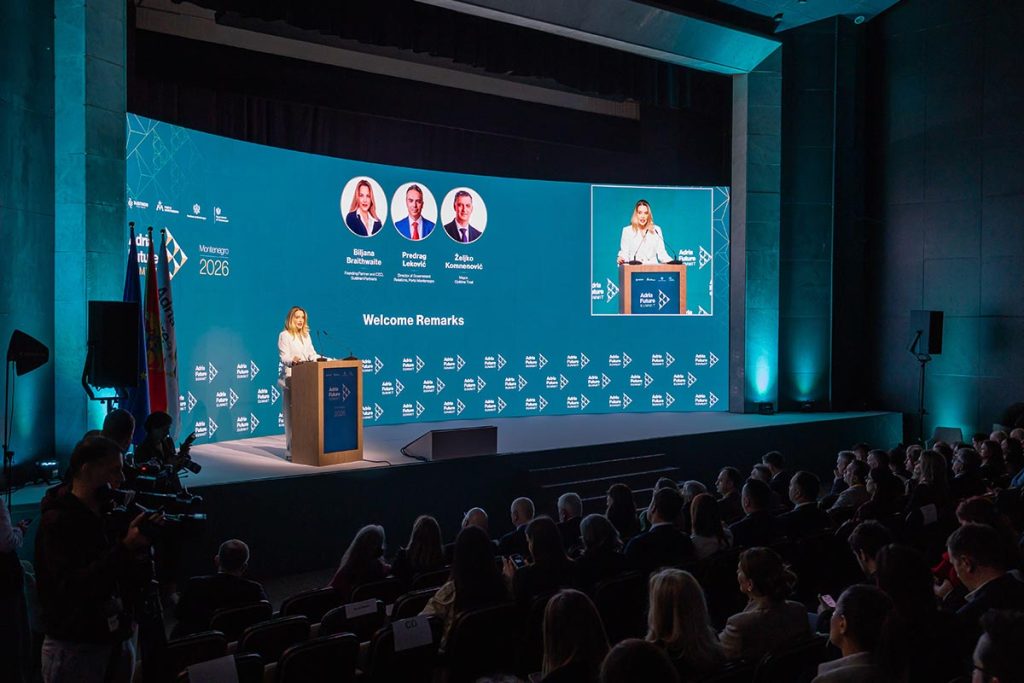
Speaking at the opening, Biljana Braithwaite emphasized that the platform exists so the region can “speak for itself, and act,” reflecting a broader shift from ESG-focused dialogue toward growth, governance, resilience, and innovation. This direction was echoed by Željko Komnenović , who framed Tivat not merely as a destination, but as a meeting point of global ambition and local responsibility. The discussions also addressed the region’s EU trajectory, with Montenegro highlighted as a frontrunner in accession talks and current chair of the Berlin Process, adding political weight to the summit’s agenda.
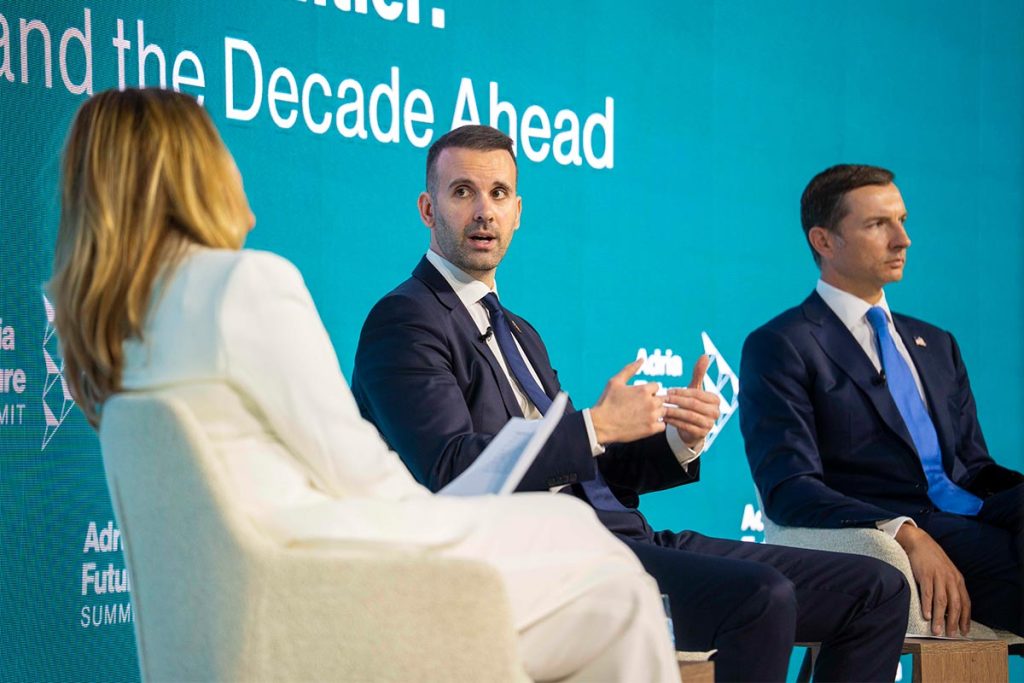
A series of high-level panels further reinforced this shift, particularly those bringing together regional ministers and senior policymakers. Discussions focused on accelerating EU integration, improving regional connectivity, and unlocking strategic investments in infrastructure, energy, and digital transformation. Prime Minister Milojko Spajić highlighted Montenegro’s ambition to maintain its frontrunner position in EU accession, stressing fiscal stability and reform implementation as key priorities. Across these sessions, a consistent conclusion emerged: the region’s competitiveness will depend on its ability to align public policy with private capital, strengthen institutional frameworks, and move from fragmented initiatives toward coordinated, cross-border projects. Speakers also emphasized that sustainable growth must remain grounded in governance, social responsibility, and long-term resilience, rather than short-term gains.
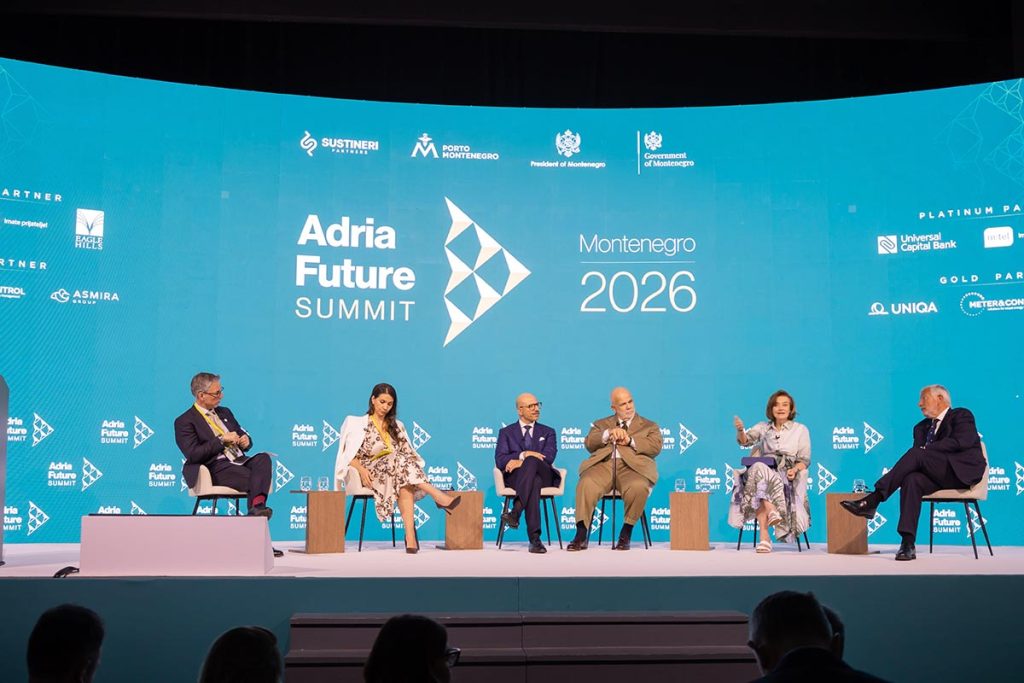
A series of high-level panels further grounded the summit’s shift toward execution, offering concrete takeaways across key sectors. At the “Where Capital Meets Ambition – Investing in the Adria Region” discussion, participants stressed that the region is no longer short on capital, but on bankable, well-prepared projects, highlighting the need for stronger institutional coordination and clearer investment pipelines. In the “Renewable Energy Economy” panel, the focus turned to energy transition as one of the region’s most immediate opportunities, with speakers underlining that regulatory alignment and faster permitting processes will be decisive for unlocking large-scale green investments.
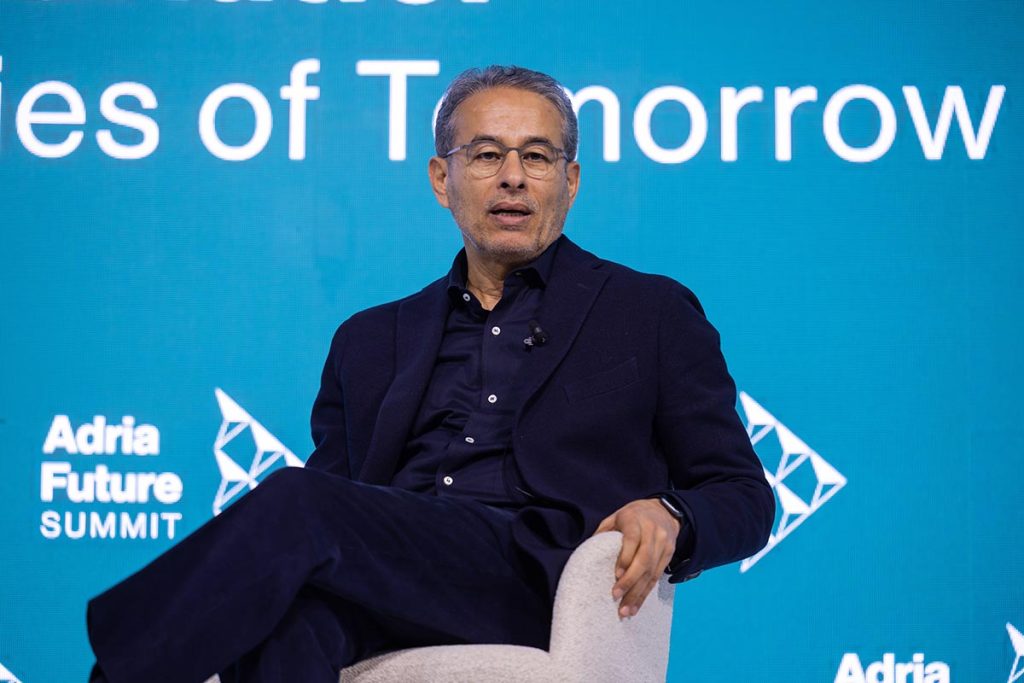
In a keynote fireside conversation, Mohamed Alabbar pointed to the Adriatic’s untapped potential as a premium global destination, arguing that long-term value lies in integrated developments that combine tourism, infrastructure, and community impact. Across these discussions, as well as ministerial panels on regional cooperation and EU integration, a consistent message emerged: the region must move beyond fragmented initiatives and focus on delivering scalable projects, where public policy, private capital, and local development strategies are aligned.
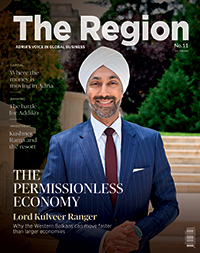
As part of the official programme, The Region hosted a focused networking event titled Montenegro Means Business, bringing together a curated group of business leaders, investors, and institutional representatives, while also promoting the publication of the same name.
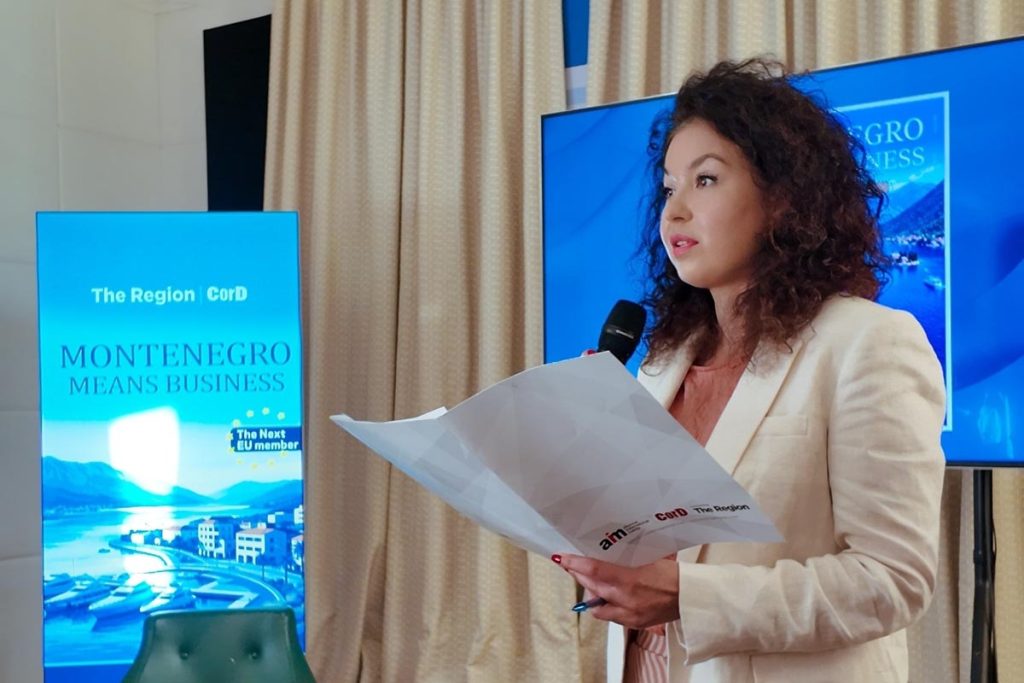
Ana Novčić, The Region Editor-in-Chief and CEO of AIM publishing house behind both The Region and CorD Magazine, opened the gathering by positioning The Region as a platform tracking how investment stories in Adria region become real projects, while announcing that its website is now available in seven regional languages alongside English, significantly expanding its reach. She also introduced the upcoming June issue, Croatia Means Business.
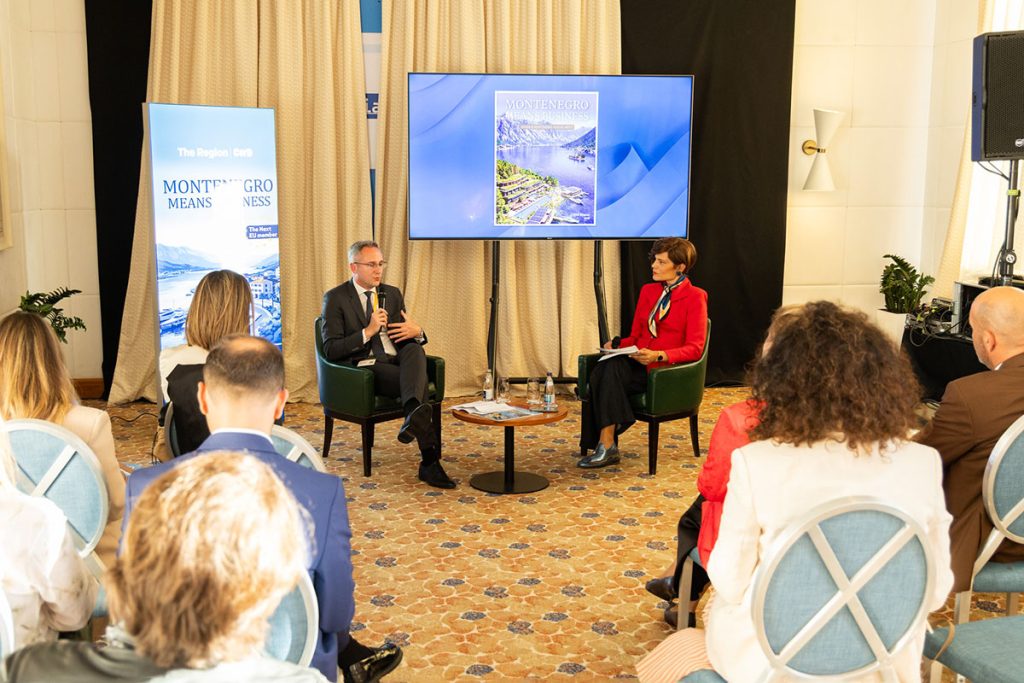
The evening’s central conversation featured Davor Kunc, Head of the European Investment Bank in Montenegro, in a fireside discussion with AIM’s COO, Ivana Jovanović, focusing on how international financing is being translated into concrete projects on the ground. This was followed by a second conversation with Đina Vukčević from WOBA, adding a perspective on regional business development and market dynamics. Among the attendees were Ambassador of Canada to Montenegro H.E. Michelle Cameron, Brankica Janković, representatives of the Montenegrin Foreign Investment Council including Arijana Nikolić and Nemanja Bojović, Budomir Raičković, President of the Association of Montenegrin Managers, and other senior figures from across the regional business community.
Overall, the Adria Future Summit confirmed its evolution into a platform not only for dialogue, but for action, bringing together the actors capable of shaping the Adriatic region’s next phase of economic and institutional development.