
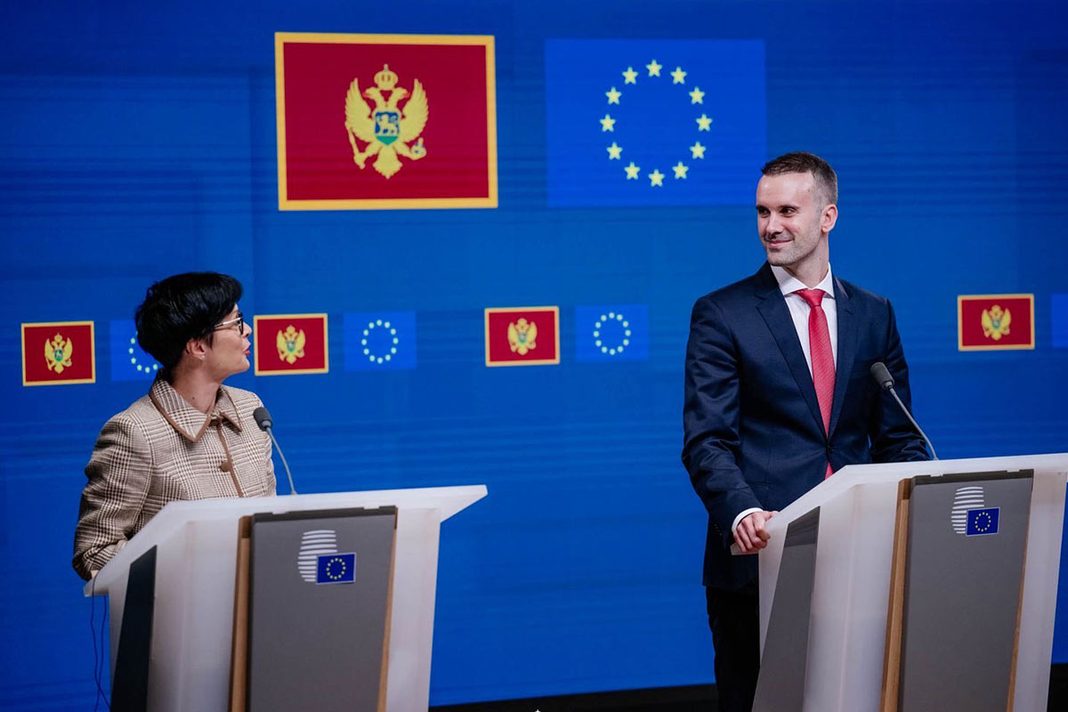
Montenegro is expected to provisionally close two more chapters in its European Union accession negotiations today, 19 November, bringing the total to 25 out of 33 and leaving eight chapters open as the country approaches its end-of-year target for completing negotiations.
The 31st EU–Montenegro Accession Conference, scheduled to take place in Brussels this afternoon, will address Chapter 16, covering taxation, and Chapter 22, covering regional policy and the coordination of structural instruments, according to the Council of the European Union.
The agenda is narrower than initially anticipated. Earlier reports suggested that Montenegro could close additional chapters covering transport policy and energy, but agreement on those chapters has not been reached.
Croatian Objections Complicate Negotiations
According to Montenegrin newspaper Vijesti, Croatia opposed the provisional closure of Chapter 14, covering transport policy, and Chapter 15, covering energy, during discussions among EU member states’ permanent representatives. Regional media have reported differing explanations for the objections, including unresolved maritime boundary and energy infrastructure issues between the two neighbouring countries.
Croatia has also previously withheld agreement on closing Chapter 31, covering foreign, security and defence policy, amid outstanding bilateral disputes with Montenegro.
These include the ownership of the naval training ship Jadran and the unresolved maritime boundary near the Prevlaka peninsula at the entrance to the Bay of Kotor.
The developments illustrate how bilateral disagreements can affect the pace of EU accession negotiations, which require agreement among member states.
Eight Chapters Expected to Remain
Montenegro has accelerated its accession negotiations during 2026, most recently provisionally closing Chapter 1, covering the free movement of goods, and Chapter 12, covering food safety, veterinary and phytosanitary policy, on 6 November.
Those agreements brought the total number of provisionally closed chapters to 23. The expected closure of taxation and regional policy would increase that figure to 25.
The European Commission has assessed that Montenegro could complete accession negotiations by the end of 2026, provided the necessary conditions are met and EU member states agree.
However, with eight chapters expected to remain open after today’s conference, the government’s timetable will depend on securing further agreement within the EU, including progress on unresolved bilateral issues.
Montenegro is seeking EU membership in 2028. Even after negotiations conclude, the country will need to complete the accession treaty process and secure the necessary ratifications before formally joining the Union.
This article will be updated following today’s EU–Montenegro Accession Conference in Brussels, when the final outcome and official statements become available.