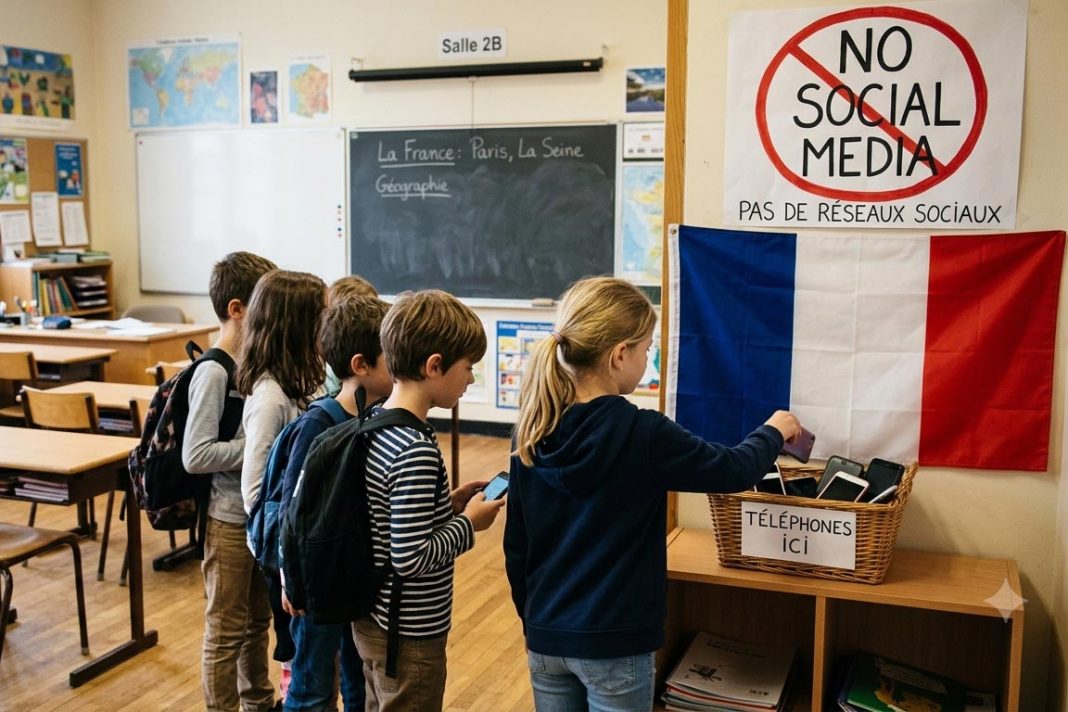
France has become the first European country to approve a nationwide ban on social media for children under the age of 15, marking one of the continent’s most ambitious efforts to address the impact of digital platforms on young people’s mental health and online safety.
The legislation, backed by President Emmanuel Macron, was approved by both houses of the French Parliament and will prohibit children under 15 from creating or using accounts on social media platforms. Companies will be required to introduce robust age-verification systems and remove existing accounts belonging to under-15 users within a four-month transition period. Educational and scientific platforms are exempt from the new rules.
The measure comes amid growing concern over the effects of excessive social media use on children and adolescents, including cyberbullying, anxiety, depression, sleep disorders and exposure to harmful content. French authorities argue that stronger regulation is necessary to better protect minors in an increasingly digital world.
France is the first country in Europe to adopt such a blanket restriction, following Australia’s introduction of a similar law for users under 16. The French government hopes the legislation will become a model for future digital safety policies across the European Union, although the European Commission will review its compatibility with EU law before full implementation.
The decision has reignited a wider debate about the relationship between young people and social media. Supporters argue that the law is a long-overdue response to mounting scientific evidence linking excessive social media use with deteriorating mental health among adolescents. Critics, however, question how effectively age verification can be enforced and warn that the system could create new privacy concerns by requiring platforms to verify users’ identities.
The French initiative also raises a broader question that governments around the world are increasingly confronting: how should societies balance children’s online safety with digital freedoms? While social media have become an integral part of modern communication and education, policymakers are placing greater emphasis on protecting young users during the most formative years of their development. France has now positioned itself at the forefront of that debate, and its experience will likely be closely watched by other European countries considering similar measures.