Hit the Energy Wall Washington said no. Moscow won’t sell. And now Serbia’s biggest refinery is going dark.
For years, Serbia treated its energy sector as a diplomatic buffer — a carefully maintained grey zone between East and West where business could operate as if geopolitics were optional. NIS, the oil company majority-owned by Russia’s Gazprom Neft, sat at the centre of that arrangement: profitable, strategically essential, and politically inconvenient in equal measure.
That arrangement has now collapsed.
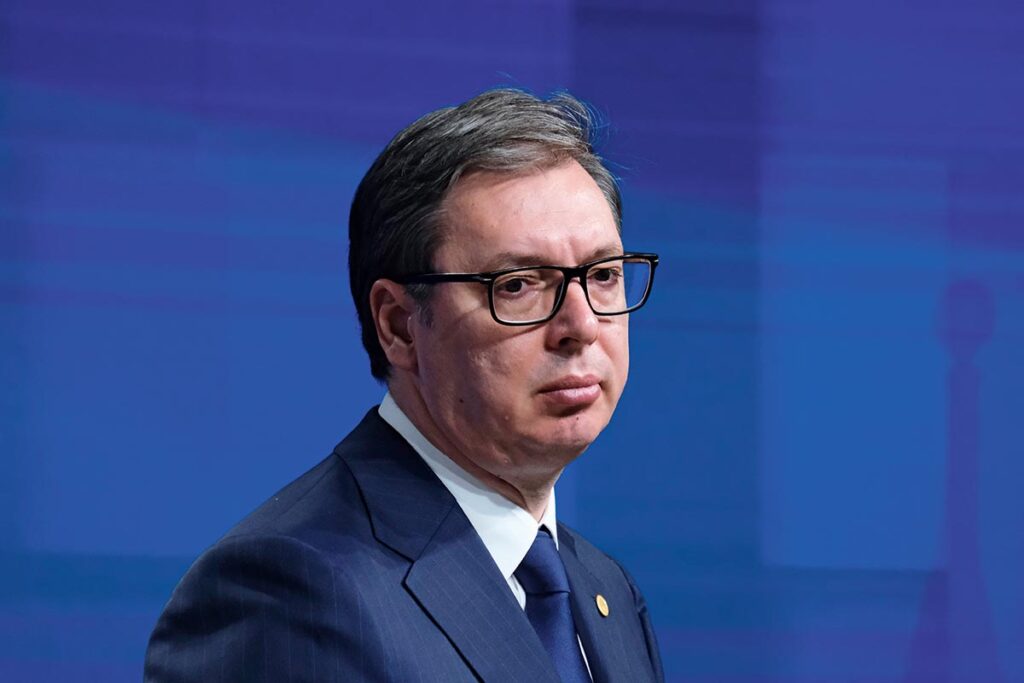
Standing before reporters after an emergency meeting on energy security, President Aleksandar Vučić confirmed what his government had hoped would never have to be said publicly: the United States has refused to issue the licence that would allow NIS to continue supplying crude oil to its refinery in Pančevo. Without that licence, Serbia’s only refinery — the backbone of the country’s fuel system — has begun shutting down crude processing.
“We expected a positive decision, but we didn’t get one,” Vučić said. For a leader who rarely concedes strategic setbacks, the statement carried the weight of an unspoken admission: Serbia’s long-standing balancing act has reached its breaking point.
Complicating the picture further, Russia has no intention of selling its stake in NIS. “They don’t want to sell, and that is their right,” Vučić said — a diplomatic way of acknowledging that Moscow still considers NIS one of its last meaningful footholds in the Balkans. What once looked like a commercial partnership has hardened into a geopolitical trap.
The consequences are no longer theoretical.
With no licence in hand, the Pančevo refinery has entered shutdown procedures. Keeping the system in warm circulation costs roughly €370,000 per day. A full halt carries far broader risks — not just for the company, but for the state. Looming over the entire process is the threat few officials are willing to spell out openly: secondary sanctions. Any bank that continues to process payments for NIS, including the National Bank of Serbia, could face penalties. For a country whose investment rating depends on financial credibility, the danger is existential.
This is no longer a story about one oil company. It is a story about a state caught in the tightening grip of geopolitical realignment.
Serbia has temporarily guaranteed payment operations for NIS to allow salaries and supplier obligations to be met, buying days — not weeks — of breathing room. Beyond that, payment flows may be frozen. If that happens, Serbia will be forced to cut NIS — and Lukoil — off from state fuel reserves after 13 December. The logic is ruthless but unmistakable: sanctioned Russian-owned entities will not be allowed to operate freely inside a country that claims a European future.
Serbia has stockpiled enough fuel to last into late January. Yet nearly half of all retail fuel sales flow through NIS stations, many located on the country’s most important highways and urban corridors. Serbia may have fuel. It may not have enough access points to distribute it efficiently. That quiet logistical strain is already surfacing beneath the political drama.
Energy policy rarely delivers moments of public clarity. This one has.
Serbia’s strategic ambiguity — its attempt to remain close to Europe without severing ties to Moscow — is fracturing under pressure from both sides. Washington has drawn a firm line. Moscow refuses to move. And Serbia is left standing on a shrinking patch of geopolitical ground.
Vučić closed his remarks with a sentence that revealed the anxiety beneath the technical language: “We will measure day by day. We will not let the banking system collapse.”
Crises in the Balkans often unfold slowly, through drawn-out negotiations and half-measures. This one arrived in a single decision — and it will define Serbia’s next decade.
