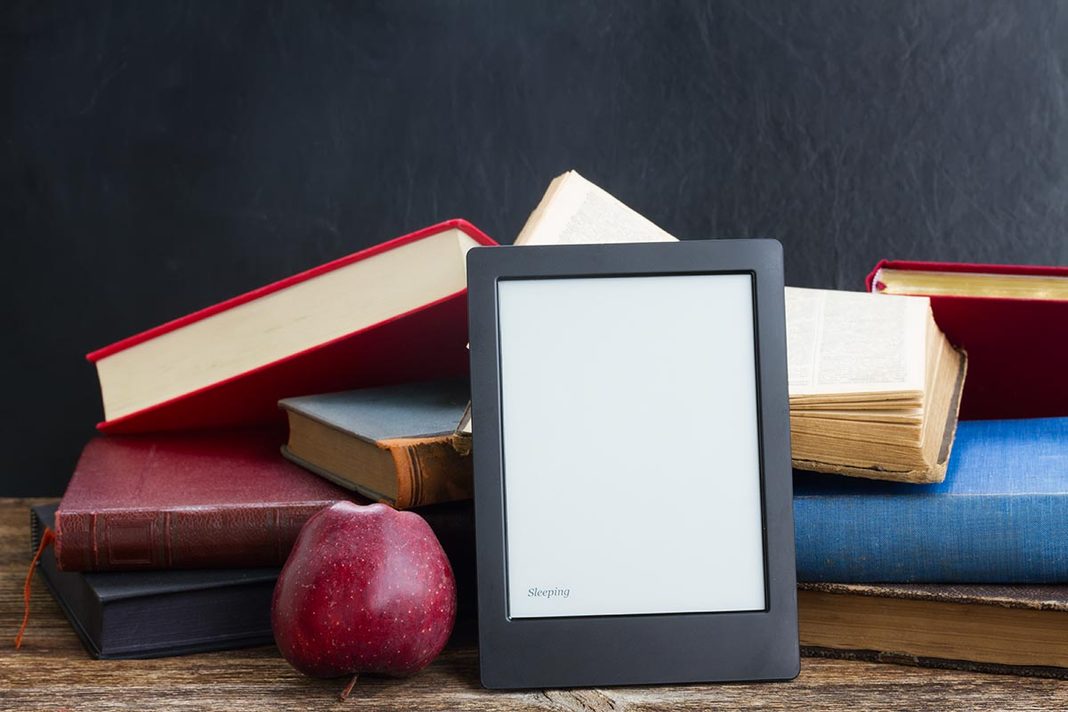
For young people in particular, the appeal is easy to understand. Students and young professionals often live in rented apartments or smaller homes where space is limited, making it difficult to store dozens or even hundreds of books. An e-reader can hold an entire library in a device that fits into a bag, without shelves filling up with books that may only be read once. It also makes it easier to access books in different languages and editions, with thousands of titles available digitally and often at lower prices than their physical counterparts.
The environmental argument is another important part of the debate. Producing printed books requires paper, water, energy, ink, transportation and packaging, while unsold or discarded copies contribute to waste. Schools face a particularly visible version of this problem: textbooks and other educational materials have to be printed, distributed and replaced as curricula change. Although e-readers also have an environmental footprint because they require materials and energy to manufacture, a single device can replace a large number of physical books over several years.
This has led to growing discussion about whether e-readers could eventually become part of education systems. Instead of asking families to purchase a new set of books every year, schools, municipalities or cities could potentially provide students with an e-reader at the beginning of their education and allow them to use it throughout their studies.
Digital textbooks could then be updated or added without printing and distributing an entirely new physical edition.
There is also one significant advantage that distinguishes a dedicated e-reader from a laptop or smartphone: fewer distractions. Unlike a computer or phone, a basic e-reader is designed primarily for reading. There is no TikTok, YouTube, social media feed or constant stream of notifications competing for a student’s attention. The device can therefore preserve much of the focused experience of reading a physical book while offering the convenience of digital technology.
E-readers are unlikely to completely replace printed books. Many readers still enjoy the physical experience of turning pages, collecting books and seeing a personal library grow. But for students, frequent travellers, young people living in small spaces and anyone who reads extensively, the ability to carry an entire library in one lightweight device is difficult to ignore.
The question may therefore no longer be whether digital reading can replace every book, but whether we should continue treating printed books as the only standard for reading and education. As technology becomes increasingly integrated into classrooms, a dedicated e-reader could offer a middle ground between the traditional book and the distracting world of the smartphone — giving students access to more knowledge, while asking them to carry considerably less.