
A child of Balkan migration became the last territorial governor of Alaska — and helped carry America’s northern frontier into the Union
Some stories begin in capitals. This one begins in Risan. From that small Montenegrin town on the Bay of Kotor, Marko “Wise Mike” Stepovich left for America during the gold-rush years, joining a generation of men who crossed oceans with little security and very little patience for small lives. He would become a miner in Alaska, a place as harsh as Montenegro’s stone hills but colder, wider, and more unforgiving.
His son, Michael Anthony Stepovich, was born in Fairbanks in 1919. Four decades later, that son would stand at one of the turning points in American political history: the moment Alaska stopped being a territory and became the 49th state of the United States.
Mike Stepovich was the last non-interim governor of the Territory of Alaska. He was also the son of a Montenegrin immigrant. Between those two facts lies a remarkable story of migration, ambition, timing, and identity.
A Frontier Family
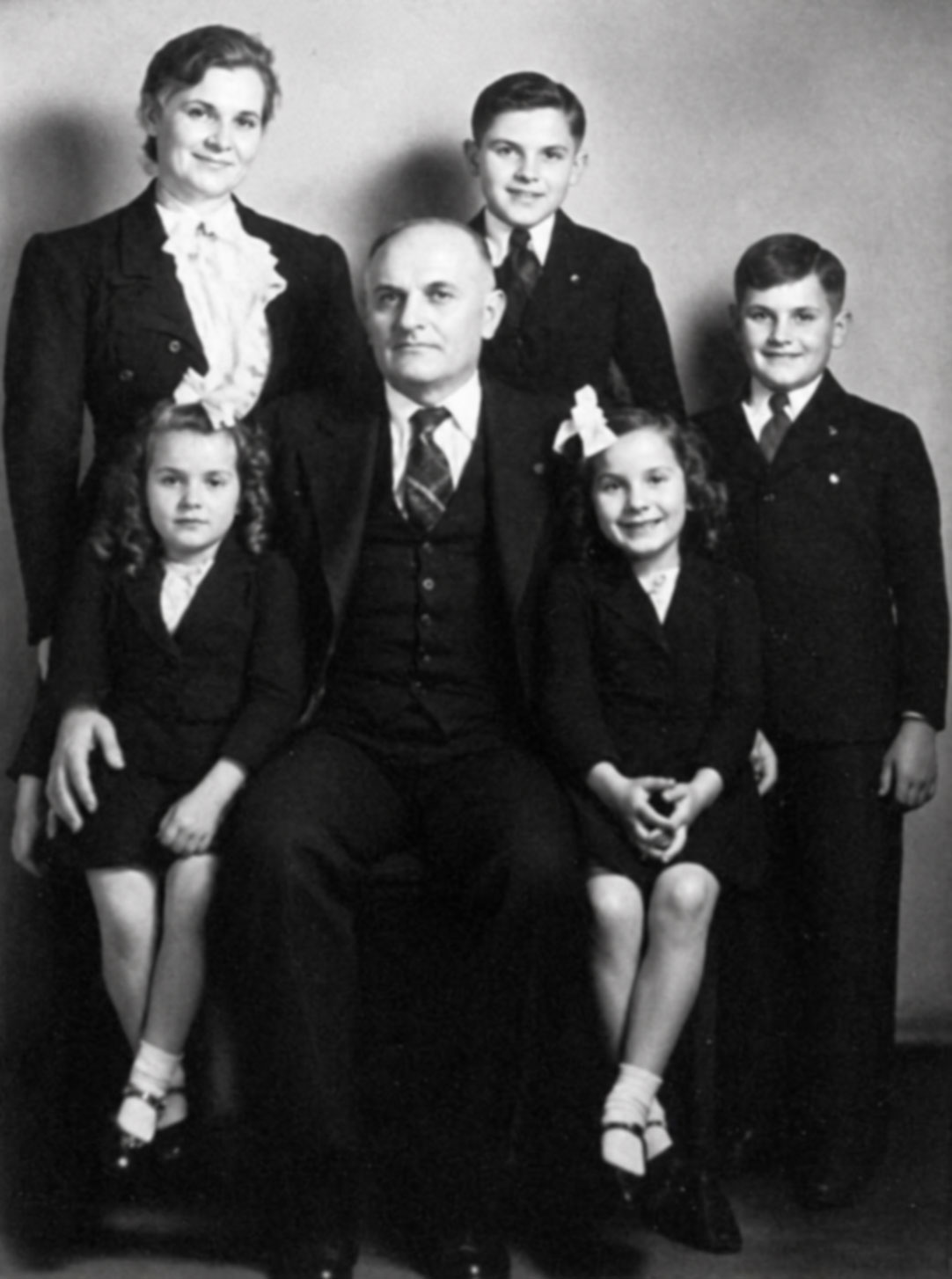
Photo courtesy of Nick Stepovich
Stepovich’s family history reads like a map of movement. His father came from Montenegro. His mother, Olga Baricevic, came from Croatian roots on Brač. Alaska, where Mike was born, was still a territory — a raw and distant place shaped by miners, traders, soldiers, migrants, and people willing to live far from certainty.
His parents separated when he was still an infant, and he was raised largely in Portland, Oregon. Yet Alaska remained the place that would define his public life. After studying at Gonzaga University and earning a law degree from Notre Dame, Stepovich served in the U.S. Navy during the Second World War. In 1947, he returned to Fairbanks, built a law practice, and entered politics.
He moved quickly. Territorial House. Territorial Senate. Minority leader. Then, in 1957, President Dwight D. Eisenhower appointed him Governor of Alaska Territory.
He was only 38. At the time, his appointment carried its own symbolism. He was young, Alaska-born, Catholic, Republican, and rooted in a migrant family story that felt almost made for the American frontier myth. Yet Stepovich’s real importance came from timing. He entered office when Alaska’s future was no longer theoretical. Statehood was close, contested, and politically urgent.
The Last Man Before the State
Alaska had spent decades making the case that it deserved full statehood. Its people wanted representation, political dignity, and control over their future. Washington still saw distance, cost, strategic complexity, and political risk.
Stepovich’s job was to help close that gap.
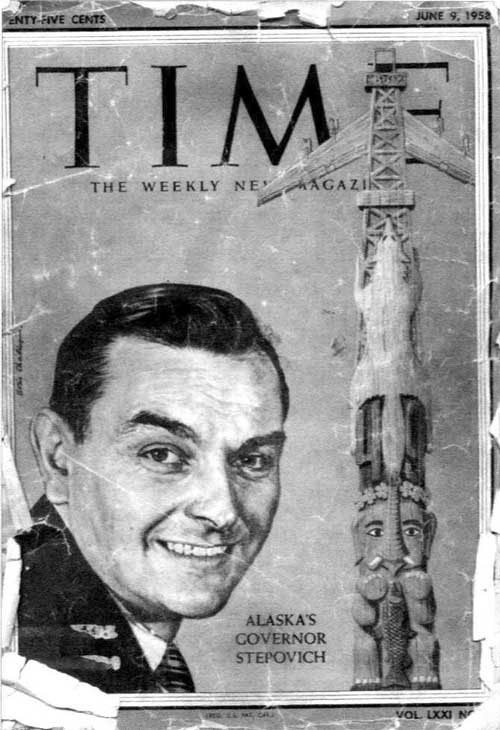
He travelled across the continental United States, gave interviews, made speeches, and argued that Alaska was ready. He presented the territory as a functioning society with strategic importance, economic potential, and citizens who deserved the full rights of statehood.
The Cold War gave the argument extra force. Alaska’s position near the Soviet Union made it more than a remote northern landscape. It was a strategic frontier. Stepovich understood that geography could become political leverage.
In 1958, when the Alaska Statehood Act passed through Congress, Stepovich was in the House Gallery. The vote was a victory for many people — Alaskan campaigners, members of Congress, local leaders, and statehood advocates who had spent years pushing the cause forward. Stepovich belonged to that final chapter. He was the governor in the room as the territory moved toward a new status.
President Eisenhower signed the Alaska Statehood Act on 7 July 1958. Alaska formally became a state on 3 January 1959.
By then, Stepovich had already resigned to run for the U.S. Senate. He lost. Later, he ran for governor of the new state and lost again.
Politics can be cruel in that way. The man who helped guide Alaska through its great transition did not become one of the dominant figures of the state that emerged from it.
But history should measure him by the moment he occupied.
The Power of Arrival
The Stepovich story matters because it belongs to more than Alaska. It belongs also to Montenegro and to the wider history of people from small countries whose lives expanded far beyond the map they came from.
His father’s journey from Risan to Alaska was part of a larger pattern of Balkan migration: men leaving poor or limited environments, entering mining camps, ports, factories, railway towns, and frontier economies. Many disappeared into labour history. Some built businesses. A few entered public life.
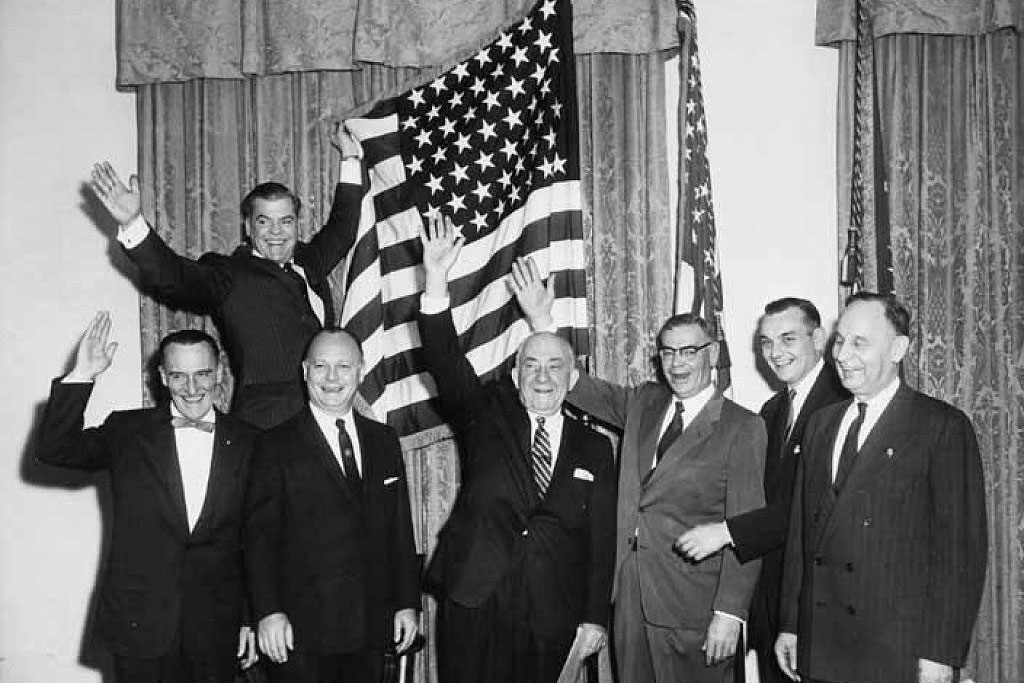
Mike Stepovich reached a level of political visibility rare for the son of an immigrant from the Adriatic coast. He governed a territory larger than most European countries. He stood inside the machinery of American statehood. His name became tied to the birth of modern Alaska.
That is the real story: a Montenegrin family line reaching into the constitutional geography of the United States.
The Man After the Moment
Stepovich’s later life carried less drama but plenty of scale. He returned to legal work, remained connected to Alaska, and built a large family with his wife, Matilda Baricevic. They had 13 children. His family would later become connected to another American story through his daughter Nada, who married NBA legend John Stockton.

He lived long enough to see Alaska mature into a state with oil wealth, strategic military importance, environmental battles, Indigenous political movements, and global visibility. The territory he once governed became a central piece of America’s northern identity.
Stepovich died in 2014 at the age of 94.
His life had stretched from frontier Alaska to Cold War statehood, from immigrant household to governor’s office, from Risan’s stone coast to the American north.
A Legacy Montenegro Should Know
Montenegro often tells stories of departure as stories of loss. Stepovich offers a different frame. His family’s departure became part of a larger chain of influence.
A man leaves Risan during the gold-rush age. His son becomes governor of Alaska. That son helps carry a territory into statehood.
There is power in that arc. It shows how small places leave marks on large histories through people who move, adapt, rise, and act at decisive moments.
Mike Stepovich deserves to be remembered in Alaska. He also deserves to be remembered in Montenegro. Because his story is not only about America’s Last Frontier. It is about how far from home a Montenegrin name can travel — and still change the map.
