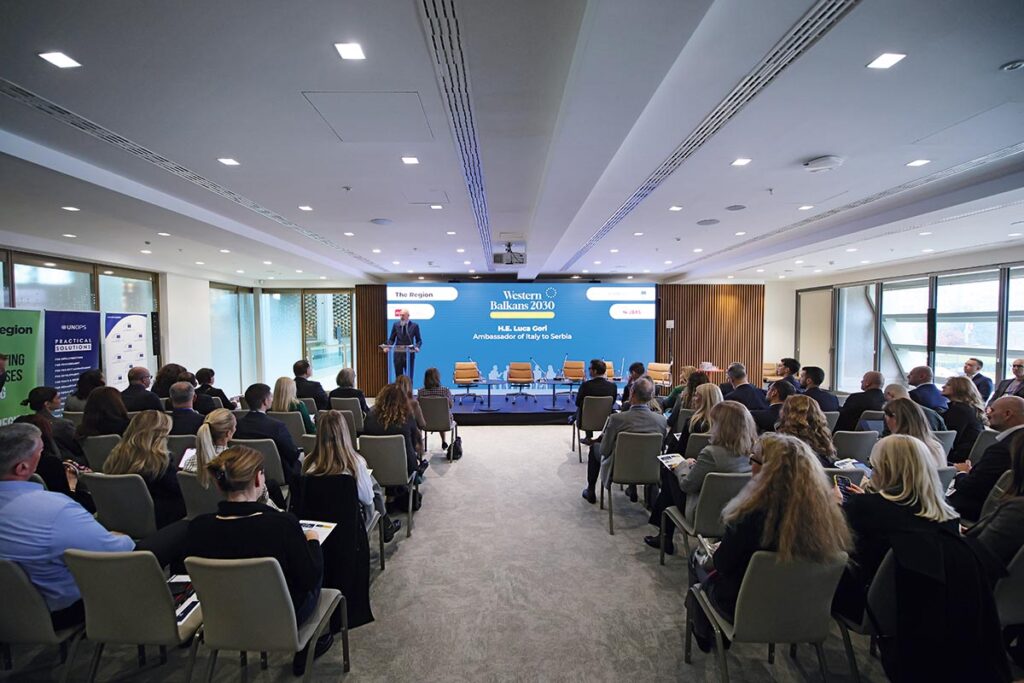
Long before the lights dimmed and the opening remarks began, the Sava Centre was already heavy with the kind of anticipation that only arrives when a region understands it is walking into a moment of truth. Ministers, ambassadors, CEOs, development financiers, innovators, and policy veterans filled the hall — a rare concentration of influence for a conference that refused to be another ceremonial roundtable. The Region magazine’s “Western Balkans 2030 – Connecting Today’s Efforts to Tomorrow’s Europe” opened not with polite optimism, but with a sharper, more urgent tone: the region is out of time, and out of excuses.
“We brought together the people who shape the future of this region,” said Editor-in-Chief Ana Novčić, setting the tone with unusual clarity. “Ideas matter — but delivery defines everything.”
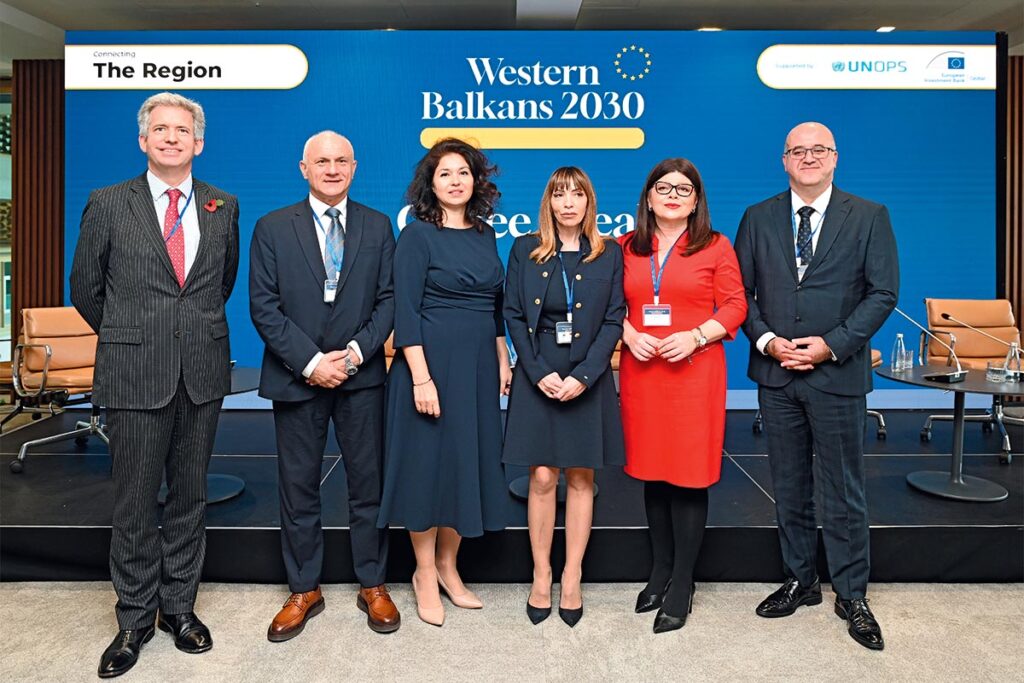
And with that, the conference shifted from dialogue to diagnosis. What has been achieved? What remains blocked? And what must change — fast — if the Western Balkans intends to avoid another lost decade?
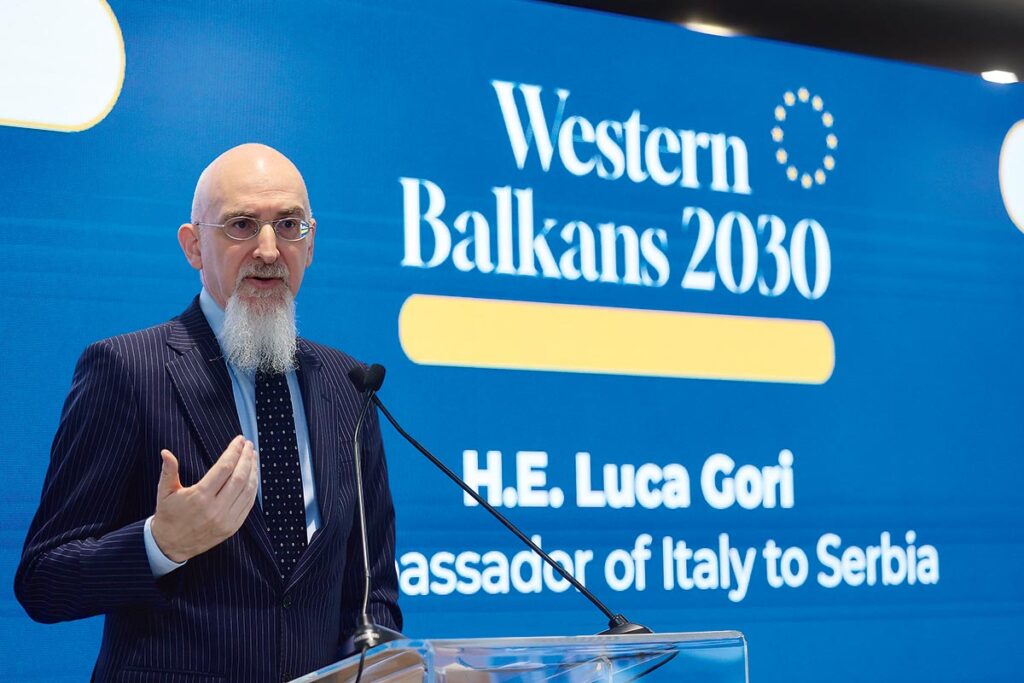
Europe’s geopolitical recalibration formed the conference’s first throughline. Italy’s Ambassador Luca Gori argued that enlargement and security are now inseparable, and that the Western Balkans must be seen not as a peripheral project but as an essential component of the continent’s stability. Reforming the accession methodology, he noted, is inevitable — but so is the EU’s own internal preparation for new members. Montenegro and Albania may be ahead, but the message was clear: the Union will not feel complete until all Western Balkan countries are inside it.
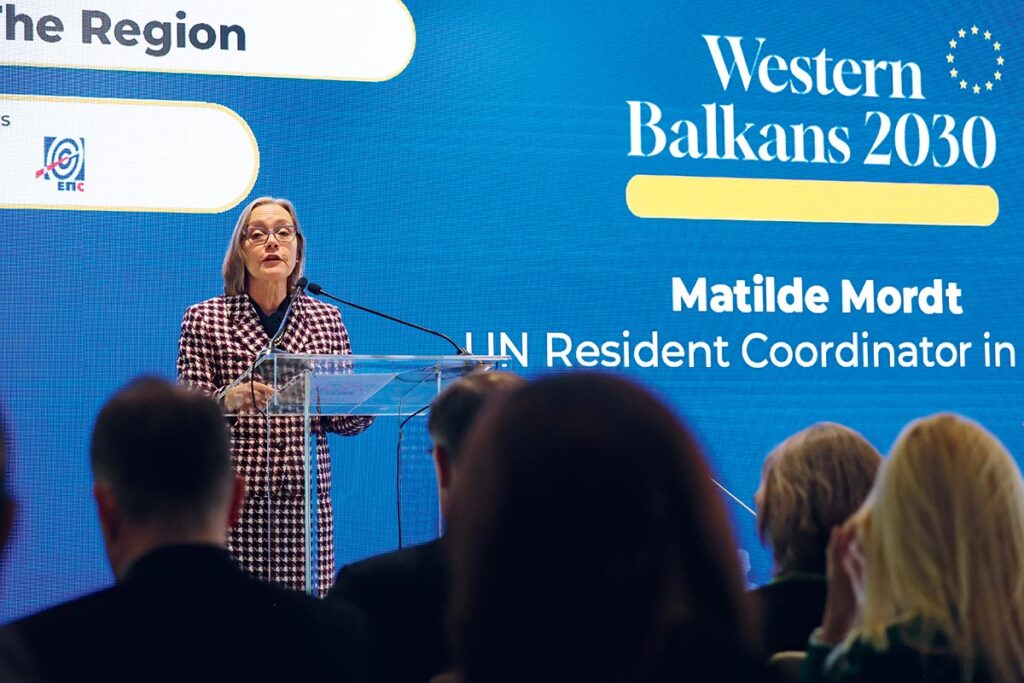
From the United Nations, Matilde Mordt added the economic architecture behind this political urgency. Infrastructure, she argued, is the skeleton of integration, but human capital is its lifeblood. Without stronger energy links, more reliable transport corridors, and digital systems designed for citizens rather than institutions, no region can hope to compete. And without investment in people, no strategy — no matter how elaborate — will survive contact with reality.
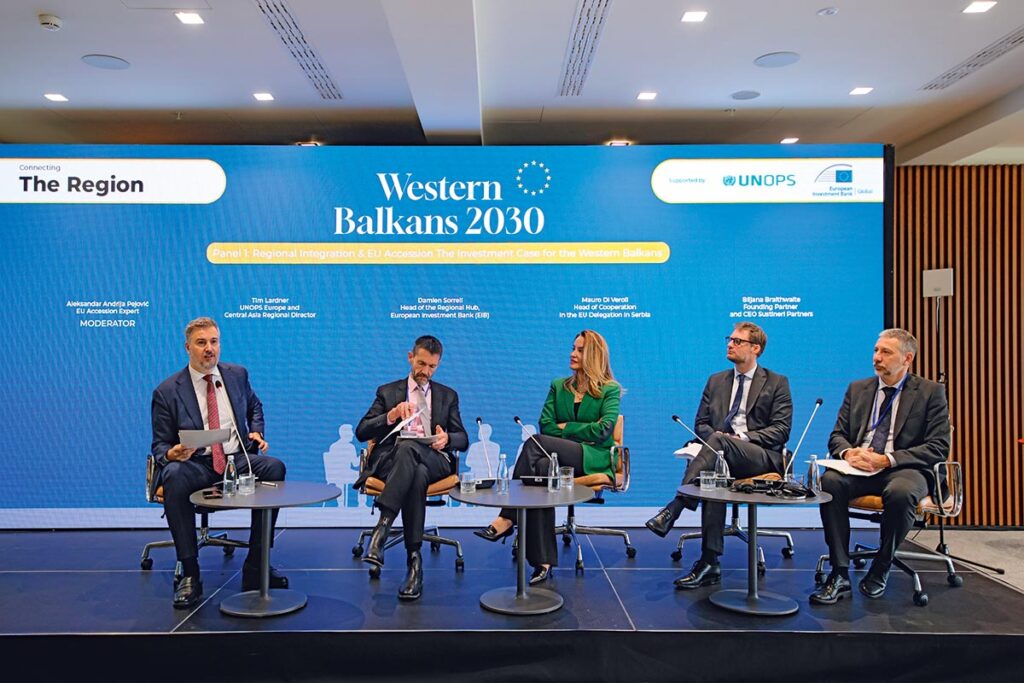
The first panel carried this momentum forward and anchored it in the logic of accession itself. What emerged was not another recitation of EU conditions, but a stark recognition that accession has shifted from a political aspiration to an economic transformation. UNOPS Regional Director Tim Lardner opened the discussion with a message that resonated throughout the day: reforms only matter when citizens feel them. He detailed years of implementation through EU PRO and EU PRO Plus — more than 500 grants, €12.5 million, thousands of companies supported, and dozens of municipalities strengthened — evidence that reforms only become real when they move from paper to practice.
Damien Sorrell of the European Investment Bank underscored what many in the room felt but rarely say so plainly. Money is not the problem. Implementation is. The green transition, energy diversification, resilient infrastructure, cross-border transport, and digital networks all require a level of institutional discipline the region has long struggled to deliver. “People need to see results,” he said. “We have to move faster.”
From the private-sector viewpoint, Sustineri Partners’ CEO Biljana Braithwaite offered a reminder that governance is no longer a fashionable acronym but the core metric investors from China to Europe use to assess risk. Transparency, sustainability, inclusion — these are not constraints but competitive advantages. Delay, she warned, is expensive.
Representing the EU Delegation, Mauro Di Veroli presented the Growth Plan not as another policy framework but as a tangible opportunity. Serbia alone stands to unlock €1.6 billion if key reforms advance. Gradual access to elements of the Single Market is on the table — but only for countries that demonstrate they can meet the commitments behind it.
The next chapter of the day — the green transition — was equal parts ambition and realism. The UK’s Ambassador, Edward Ferguson, reflected on Britain’s path to eliminating coal and building a renewable energy system. The transformation, he said, required not only technology but the political courage to cut unnecessary procedures and allow strong projects to move quickly. His comments landed with force in a region where administrative inertia remains one of the most immovable barriers to change.
But it was Arslan Umut Ergezer of the Regional Cooperation Council who provided the statistic that captured the magnitude of the challenge ahead: the Western Balkans will require around €40 billion in climate adaptation alone. The scale simply cannot be shouldered by donors or governments. Private capital will be indispensable, but only if the region can offer predictability, coordination, and credible long-term planning.
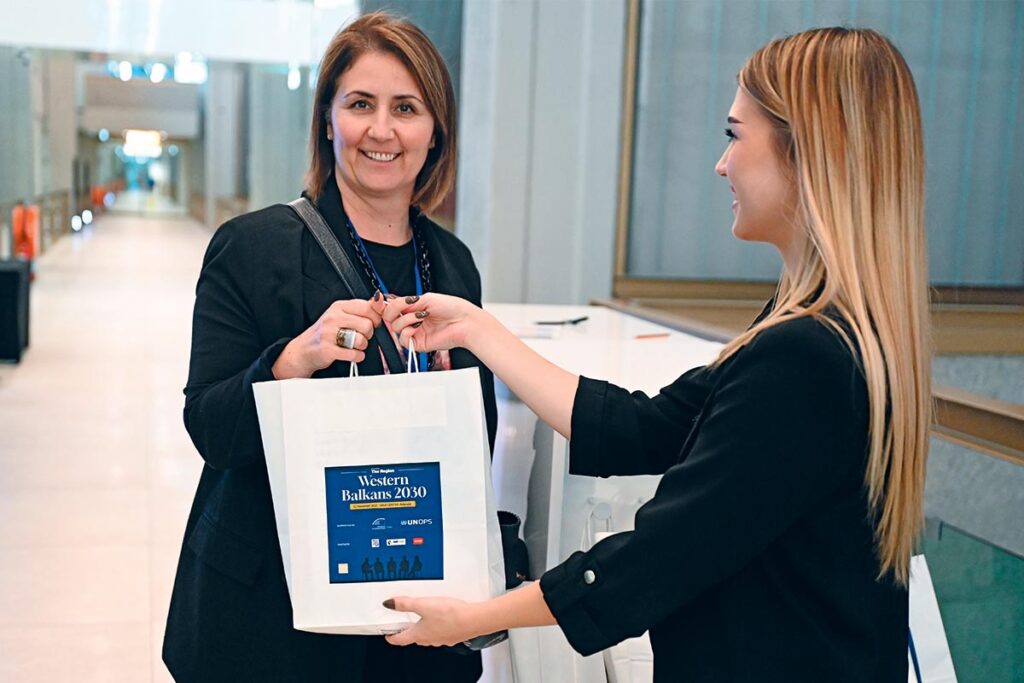
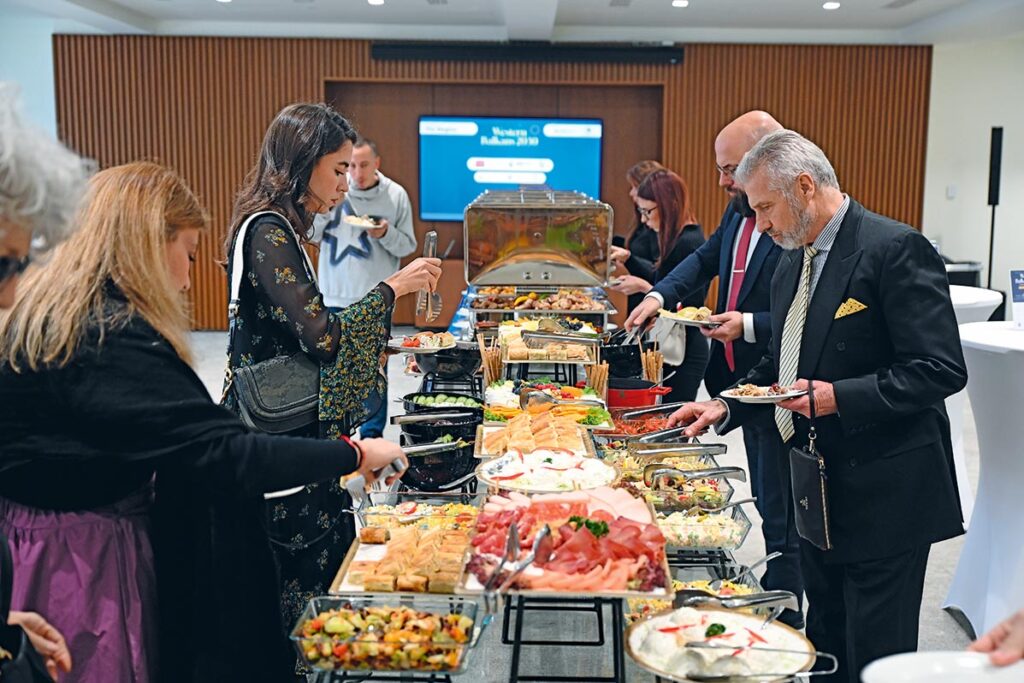
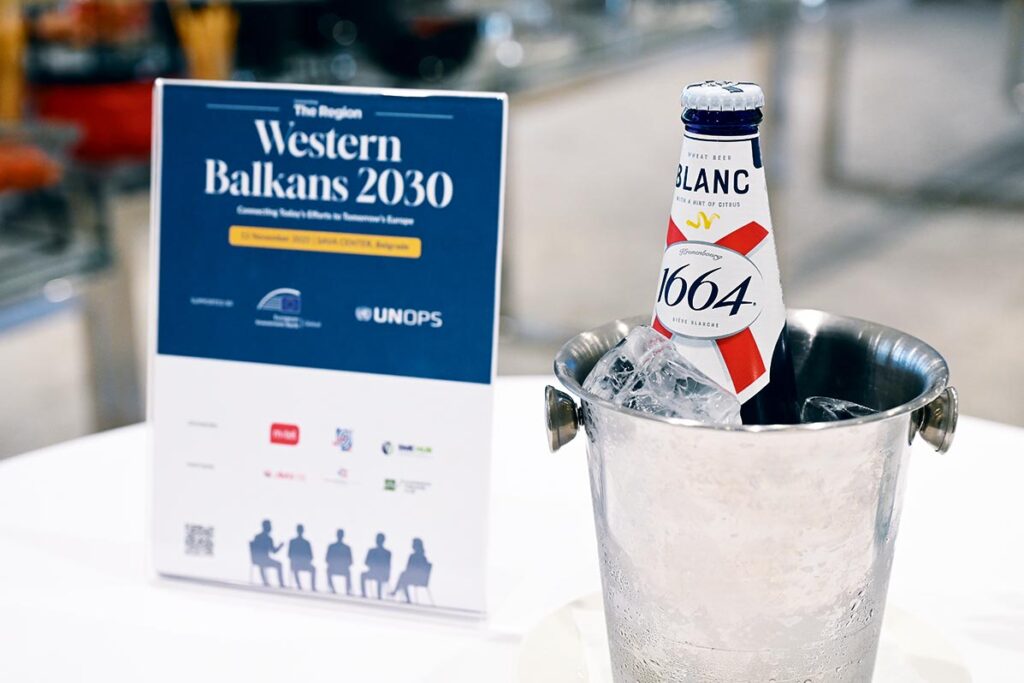
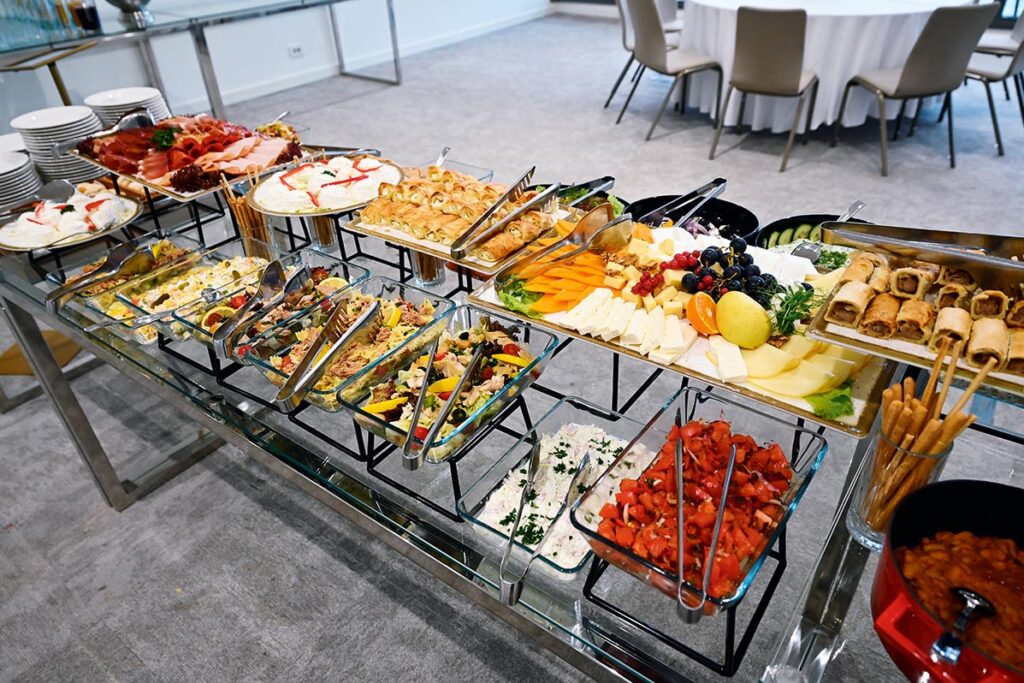
The “Western Balkans 2030 – Connecting Today’s Efforts to Tomorrow’s Europe” conference was supported by the European Investment Bank (EIB) and UNOPS, sponsored by Elektroprivreda Srbije (EPS), MTEL and SME Hub, with Carlsberg supporting the networking lunch
Serbia’s Assistant Minister for Energy Efficiency and Climate Change, Maja Vukadinović, delivered the kind of candour often missing from conversations about decarbonisation. With nearly two-thirds of electricity still coming from coal, Serbia cannot shut down plants without first building new capacities and storage. She outlined the country’s substantial pipeline — the 1 GW solar-battery project, hydrogen storage systems, the Bistrica hydropower plant, and a solar-thermal facility in Novi Sad — as proof that transition is already underway, even if its pace must remain carefully balanced with energy security.
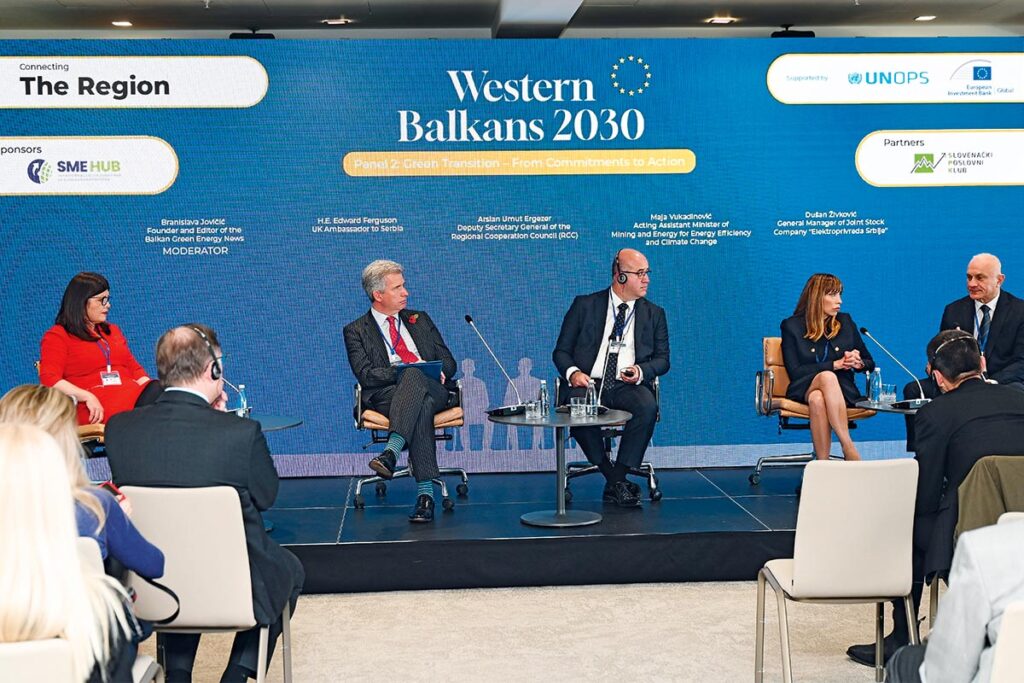
EPS General Manager Dušan Živković drove that point home. Electricity is not only a commodity; it is a precondition for social stability. Transition that ignores this reality is not transition — it is disruption. Stability must guide every decision.
Digitalisation, the focus of the third panel, offered the region its most immediate opportunity. While energy systems and infrastructure demand enormous capital, digital transformation requires something more achievable: institutional coordination and a mindset shift. North Macedonia’s Deputy Prime Minister, Ivan Stoilković, positioned digitalisation as the region’s quickest route to European alignment.
A unified digital infrastructure, he argued, is not a technical exercise but a political and economic one.
Finland’s Ambassador Niklas Lindqvist presented one of the world’s most compelling benchmarks: 85% of Finns now use digital public services, surpassing EU targets years ahead of time. The success, he stressed, came from involving citizens directly in the design of services, ensuring trust and inclusivity from the start.
Serbia’s own example — the mobile registration system for seasonal agricultural workers — demonstrated how quickly a functional model can scale. After proving successful at home, it has already been adopted in four neighbouring economies, illustrating the region’s ability to leap ahead when solutions are practical and transferable.
MTEL Montenegro’s CEO, Zoran Milovanović, spoke to the human dimension: technology evolves daily, but societies do not. Education must keep pace or digitalisation becomes a hollow slogan. SME Hub Director Aleksandar Goračinov reinforced the point by arguing that software never transforms a company — leadership does.
The panel ended with a sharp look at the horizon. Dražen Višnjić of Republika Srpska’s ICT Agency outlined ambitions in artificial intelligence, robotics, advanced electronics and medicine — sectors where the Western Balkans must decide whether it will participate or be left behind.
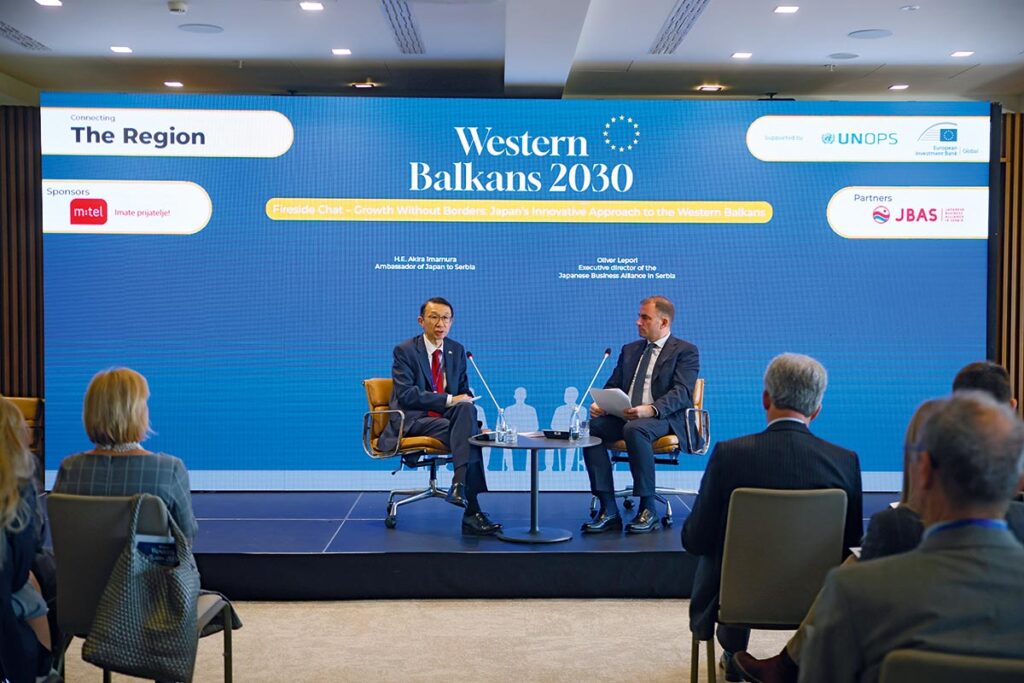
The fireside chat with Japan’s Ambassador Akira Imamura and Oliver Lepori of the Japanese Business Alliance added an unexpected but resonant perspective: long-term thinking seldom comes easily to regions caught in the rhythms of political cycles. Japan does not approach the Western Balkans as a frontier market but as a long-horizon strategic investment. Stability, skills, and partnership — these are the cornerstones of Japanese engagement, and they offer the region a model of patience and purpose.
By the end of the day, one message echoed across every session: the Western Balkans do not lack ambition. They lack time.
2030 is not a hopeful marker. It is a deadline. And the window for meaningful change is closing.
