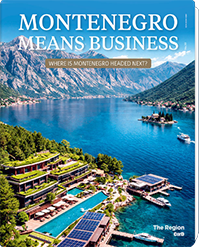
MTEL’s CEO Zoran Milovanović on the shift from telecom operator to regional force in cloud, fintech, cyber defence and AI-ready innovation.
MTEL Montenegro isn’t simply upgrading its network — it’s reinventing its identity. Under CEO Zoran Milovanović, the company has moved beyond the familiar borders of telecom and into the harder terrain of digital infrastructure, financial technology, cyber-resilience and talent development. In a region pushing toward a smarter, safer digital economy, Milovanović argues that MTEL is no longer following the curve. It’s setting it.
FROM TELECOM OPERATOR TO TECHNOLOGY PLATFORM
MTEL is no longer just a telecom operator — the company is becoming a platform for fintech, cloud services, digital identity and enterprise IT solutions. How does this transformation look from the CEO’s chair, and which services will define the next five years?
MTEL’s journey from 2007 until today has, I can freely say, been revolutionary, especially considering that we are now the market leader not only by the number of users but also by innovation. With over 40 percent market share in mobile telephony, television and internet, we continue to push boundaries in many other fields.
With our most modern streaming application, our MOVE service, we have raised the digital TV experience to a completely new level, while with the SiguranNet service we have ensured complete online safety for our users.
The telecommunications industry is undergoing the biggest transformation since the emergence of mobile telephony, and I am very proud of where we stand today.
I can freely say that we are setting the foundations for building the digital economy. We live that transformation and change — we not only build digital identity, we set the trends.
Looking five years ahead, I expect several strong directions: fintech — mobile payments, interoperable financial services and new digital banking functions will be one of the key pillars of growth; cybersecurity — the business sector will require local and reliable cloud environments as well as advanced security services; and digital identity — I believe digital identification will become the key to entering all ecosystems, from government services to banking and healthcare. Digital identity is measured by digital literacy, the quality of data management and the readiness of companies to embrace new business models.”
REGIONAL INTEGRATION THROUGH CONNECTIVITY
Fragmented markets create fragmented standards, prices and user experience. Can telecom companies push the region toward a unified digital market — and is the region ready?
The digital economy really doesn’t recognise borders. Users expect to move across the region as if it were a single digital territory — to have the same experience, the same standards and the same services everywhere. Although this is the European model, I am certain it is achievable here as well.
Telecommunications operators have already laid the foundations: the standardisation of 4G and 5G networks,
joint investments, lowering roaming prices and harmonising user policies are creating a new reality.
I believe we are all ready — the region is ready, the users are ready, the companies are ready.
If we continue aligning digital standards, the Western Balkans can become the first region outside the EU to build a functional unified digital market.”
CYBERSECURITY: THE QUIET FACTOR OF COMPETITIVENESS
As Montenegro’s 2022 cyberattack showed, a single breach can paralyse an entire country. Does the region take the threat seriously enough — and what should come first?
I think that awareness among citizens and companies about cybersecurity is increasing day by day, and the company I lead works on this with commitment and strategy. Unfortunately, experience shows that cybersecurity is usually noticed only when systems stop working — and that is the biggest problem.
Attacks are becoming more sophisticated, global and orchestrated. As I mentioned, we have implemented the SiguranNET service, which allows all users to be completely protected. Regarding the statistics for our SiguranNET service, it is important to note that at least 30 percent of users experience at least one type of cyber incident in a single month — an incident our service prevents before it occurs.
While developing the service, we also worked intensively on educating citizens about safe internet use. We started with primary schools, where our employees organised interactive classes to adequately prepare children for the online space.
Together with the Government of Montenegro, we continued organising a series of programmes such as the Digital Academy, which includes digital literacy for vulnerable groups, with a special focus on cybersecurity.
MTEL has been investing for years in advanced detection systems, security centres and user protection. Cybersecurity is not a luxury — it is a prerequisite for the stability of the digital economy.
Telekom Srbija Group has acquired PULSEC, a company from Serbia with 150 cybersecurity engineers specialised in protecting business systems from all types of cyber threats. Through cooperation with PULSEC, MTEL now offers its business users comprehensive cyber protection services — from end-points such as mobile phones and laptops, through network protection and backups of all business data, to the most advanced SOC capability, a security operations centre through which our engineers monitor and respond in real time 24/7 to all types of unwanted situations.”
THE AI AND CLOUD THRESHOLD
Everyone talks about AI transformation; few are prepared for it. What must businesses do in 2026 to be ready for AI, cloud migration and a new wave of digital competitiveness?
AI requires much more serious preparation than any previous technology. That is why I emphasise that 2026 must be the year in which companies finish their homework. This includes migrating key systems to the cloud, because AI requires flexibility and scalability of infrastructure; organising data and introducing systematic data governance so that AI truly has quality material to work with.
Equally important is the development of employees’ digital skills through training, certifications and the creation of internal AI teams.
MTEL will undoubtedly be a key partner to Montenegrin businesses in this transition.”
THE TALENT RACE
Every country in the region is losing digital talent to higher salaries abroad. How does MTEL plan to retain and attract the engineers and innovators who will build the next decade of digital services?
In our company, we nurture a culture of innovation where employees have the opportunity to propose, test and develop solutions that change the market. Through numerous projects, our employees have the opportunity to improve, develop and advance. That is why MTEL offers what is very important — challenging projects, top technology and a culture that encourages innovation.
Our strategy is based on several pillars: systematic work with young experts through programmes at the Digital Factory, partnerships with universities and structured mentoring programmes.

MTEL, together with the President of Montenegro Jakov Milatović, enabled the best students from Montenegro, through a scholarship programme, to study at the world’s most prestigious universities, and MTEL opened its doors to them for employment upon graduation. We also signed a scholarship agreement with the University of Montenegro, while students of the Electrical Engineering High School were given the opportunity to complete practical training in our company.
I believe that Montenegro can retain digital talent, because the challenges that exist here are just as big as those abroad.”
