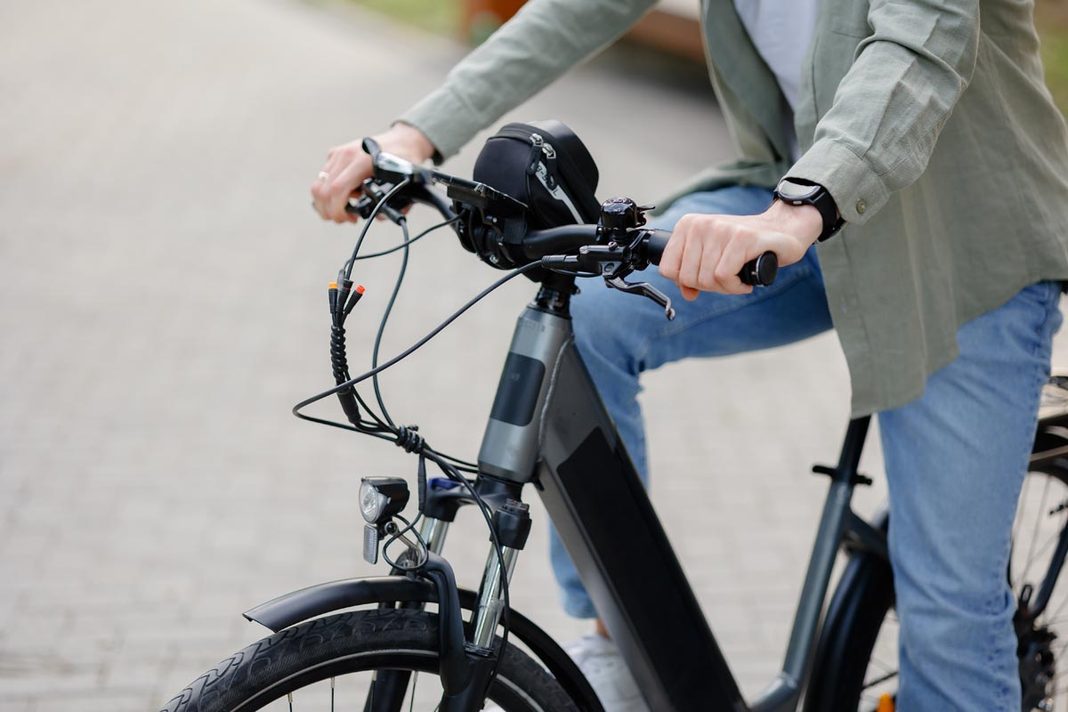
A new public e-bike rental system is being introduced across the wider Ljubljana region in an effort to promote sustainable mobility, reduce car traffic and provide commuters with a convenient alternative for everyday journeys.
Eight municipalities, together with the City of Ljubljana, are participating in the bicikEL project, either already or in the near future. By the end of this year, 118 Nomago electric bicycles are expected to be available at 35 locations, with docking stations planned in Trzin, Komenda, Škofljica, Dobrova–Polhov Gradec, Mengeš, Brezovica, Medvode and Dol pri Ljubljani.
The system will be compatible with Ljubljana’s existing public e-bike rental network and accessible through the Urbana mobile app. One of its main advantages is that users will be able to rent a bicycle in one municipality and return it in another, making the service particularly suitable for people commuting across municipal boundaries.
The Regional Development Agency of the Ljubljana Urban Region initiated and coordinated the project.
Medvode Mayor Nejc Smole said e-bikes could become a practical solution for everyday travel, allowing residents to cycle directly to work or use the bikes to reach the nearest bus or railway station from their homes. An annual subscription will cost €25 and allow users unlimited kilometres.
The municipalities agreed on the project in 2024, when the total investment was estimated at €5.4 million. The long-term plan is to expand the network across the entire Ljubljana urban region by 2028, with around 550 e-bikes operating in 21 municipalities.
The initiative comes as the Ljubljana area continues to face heavy daily commuting. More than 140,000 people travel to the region for work every day, making it Slovenia’s largest commuter belt. Local authorities have increasingly focused on alternatives to private cars, including public transport, cycling and other forms of sustainable mobility.
However, the expansion of e-bike rental services will also depend on the development of cycling infrastructure. The regional development agency is working on this in parallel, with ten new cross-municipal cycling connections planned by the end of 2029. Together, they are expected to add around 30 kilometres to the regional cycling network.