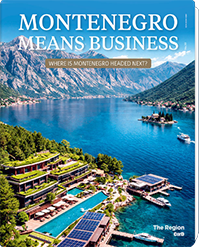
Why delivery, not ambition, will determine the Western Balkans’ path to a more integrated and prosperous decade.
At the “Western Balkans 2030” conference in Belgrade, one message cut through the noise: the region is on the clock. Ambition is no longer the problem — delivery is. With funding on the table, political attention sharpened, and public expectations rising, the Western Balkans now face a test measured not in strategies but in outcomes.
UNOPS Regional Director for Europe and Central Asia Tim Lardner, who brings three decades of experience in the humanitarian and development sectors, is clear about the moment: progress is visible, but the gap between planning and execution still defines who moves ahead and who falls behind. In this conversation, he breaks down where the region is gaining ground, where implementation still stumbles, and what it will take to turn 2030 from a deadline into a turning point.
WHERE DELIVERY GAINS TRACTION — AND WHERE IT STALLS
We hear often that implementation is where development succeeds or fails. In the Western Balkans, policy ambition is high, but execution still determines everything: trust, timelines, and real impact. Where do you see the region making the strongest progress in turning plans into real, measurable outcomes on the ground, and where does delivery still fall short?
Across the region, we see a growing focus on delivery, not just planning. There has been real progress in areas where governments have strengthened institutions and built technical capacity, especially where reforms and investments meet strong local ownership.
In Montenegro, for example, the commitment to institutional strengthening is particularly visible. Initiatives implemented by UNOPS, such as support to the sector of rule of law and fundamental rights, or digital transformation of local self-governments, contribute to the reform of public service systems and demonstrate a clear dedication to improving governance. These reforms create the conditions for long-term stability and sustainable economic and social impact.
In Serbia, programmes like EU PRO Plus and EU Integra have shown how policy ambition translates into upgraded local infrastructure,
support for small business competitiveness, and more inclusive and responsive municipal services.
In North Macedonia, energy-efficiency upgrades in public buildings are now being implemented at scale through the EU for Clean Air project. These are changes that people in communities experience almost immediately, and they reinforce trust that institutions are addressing their needs.
Progress becomes most tangible when institutions and communities work side by side. Where the region still faces challenges is in complex, multi-sector projects that require coordinated action across levels of government, and sometimes across borders. There is no lack of ambition, but implementation requires sustained focus and operational capacity. Strengthening that capacity will remain essential, and UNOPS is ready to continue supporting the region to deliver on long-term objectives.
THE INFRASTRUCTURE THAT WILL CHANGE THE REGION MOST — BEFORE 2030
From educational and health facilities to digital public services and sustainable local economies, over the past two decades UNOPS has become one of the most influential infrastructure actors in the region. Which types of infrastructure projects, in your view, have the greatest potential to transform the Western Balkans before 2030?
Three areas stand out as truly transformative for the coming years.
First, green and resilient public infrastructure. Schools, hospitals, and municipal buildings that are energy-efficient and disaster- resilient deliver savings, protect communities, and reduce emissions. Through the Enhancing School Infrastructure in Montenegro project, implemented by UNOPS with funding by the European Investment Bank, together with national and local institutions, we contribute to improving the safety, accessibility, and energy performance of schools. These types of initiatives will benefit children today and strengthen national resilience for decades to come.
Second, digitalization. In Serbia and Montenegro, UNOPS supports the digital transformation of local self-governments by enhancing their capacities and supporting the acquisition of hardware and software components to digitalize public administration. We see how new systems improve security, transparency, inclusion, reduce administrative burdens, and make services more efficient and predictable for citizens and businesses. Digital infrastructure creates a more open, competitive environment that prepares countries for EU integration.
Digital systems also connect institutions across borders and create the conditions for a more integrated region and more integrated societies.
Third, initiatives that support environmental governance and sustainability. In Serbia, with the support of the Swiss government through the joint UN Programme PRO – Local Governance for People and Nature, we are enhancing the operational capacities of local self-governments and civil society organizations to actively address environmental protection issues in their communities. In North Macedonia, initiatives such as the clean-up of contaminated soil at the former Organic Chemical Industry of Skopje factory contribute to reducing negative environmental impacts and improving public health.
A practical way to make infrastructure sustainable is by coupling it with social inclusion measures, such as those implemented in Serbia for 350 families through the EU Support to Social Housing and Active Inclusion Programme, designed to build social housing units while supporting communities with social measures.
When appropriate and sustainable infrastructure, strong institutions, and digital systems evolve together, the region gains the momentum it needs to reach its 2030 ambitions.
THE ONE OPPORTUNITY THE REGION CANNOT WASTE
The timeline between now and 2030 seems very short. Funding is available, political attention is high, and citizens expect visible progress. What is the one opportunity the Western Balkans cannot afford to waste in the next five years, and what will define whether the region captures it or misses it?
The biggest opportunity is to deepen regional integration through practical, tangible projects that address shared needs and demonstrate joint progress. Whether it is digital interoperability, climate-resilient infrastructure, or green energy systems, cooperation can multiply impact and accelerate EU alignment.
What will determine success is the ability to convert commitments into actions.
This means stronger institutions, predictable project pipelines, transparent procurement, and results-oriented partnerships. It also requires a mindset that sees the Western Balkans as a single region with shared goals.
If the region maintains a strong focus on delivery, the next five years offer a unique chance to make a step-change in development, bringing the Western Balkans and its citizens much closer to a European future.
UNOPS’ ROLE IN CONVERTING AMBITION INTO ACTION
How do you see UNOPS’ role in helping the region seize this moment?
UNOPS contributes to this vision by helping governments transform plans into real results. We have been present in the Western Balkans for more than two decades, working hand in hand with national governments, the European Union, Switzerland, Norway, Sweden, international partners, and local communities. What we bring is not just technical expertise and knowledge of the local context, but reliability and a commitment to delivering tangible results on the ground, while building local ownership.
Across Europe and Central Asia, we see how the region’s future is
increasingly being defined by the ability to implement complex reforms and investments effectively. In the Western Balkans, this capacity is strengthening year after year. Our role is to support that progress, help accelerate project delivery, and ensure that the investments made today create real, lasting impact for the people of the region.
The Western Balkans has huge potential. With determination, cooperation, and a focus on delivery, it can transform that potential into a strong, stable, and prosperous future, well before 2030.
