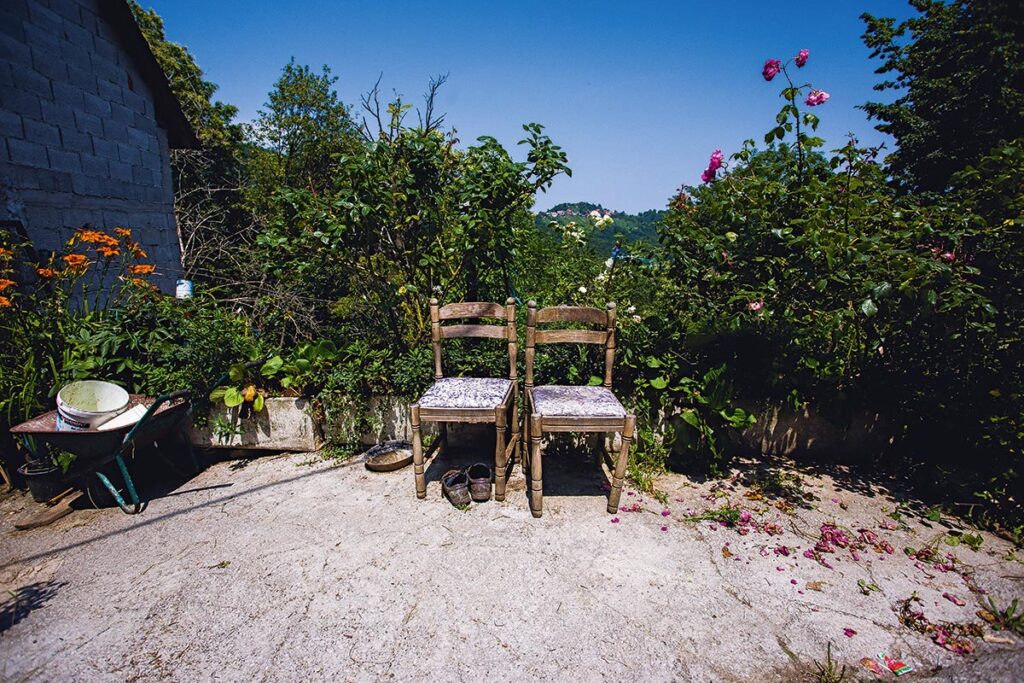
You don’t come to Gostuša by accident. The road that climbs toward the village coils through Stara Planina like it’s thinking twice. Then, suddenly, the trees open and the valley appears — quiet, ridged, and almost absurdly intact. Stone houses stand where families once planned their futures; a schoolyard survives without the sound of children; a half-collapsed barn leans against the landscape like a punctuation mark. It feels less deserted than paused.
For years, villages like this were treated as the fine print of modernisation — the collateral damage of people leaving the countryside for cities that promised more. The numbers told a stark story: shrinking populations, collapsing birth rates, empty homes sold for the price of a phone. The region absorbed the losses and quietly assumed they were permanent.
But permanence is overrated. Europe, after decades of urban consolidation, is facing a new reality: crowded cities, overheated summers, absurd housing prices, wornout public services. The idea that the “future” happens only in metropolitan centres now looks like a relic. The 21st century has begun revaluing what the Balkans still possess in extraordinary quantity: space, nature, silence, identity.
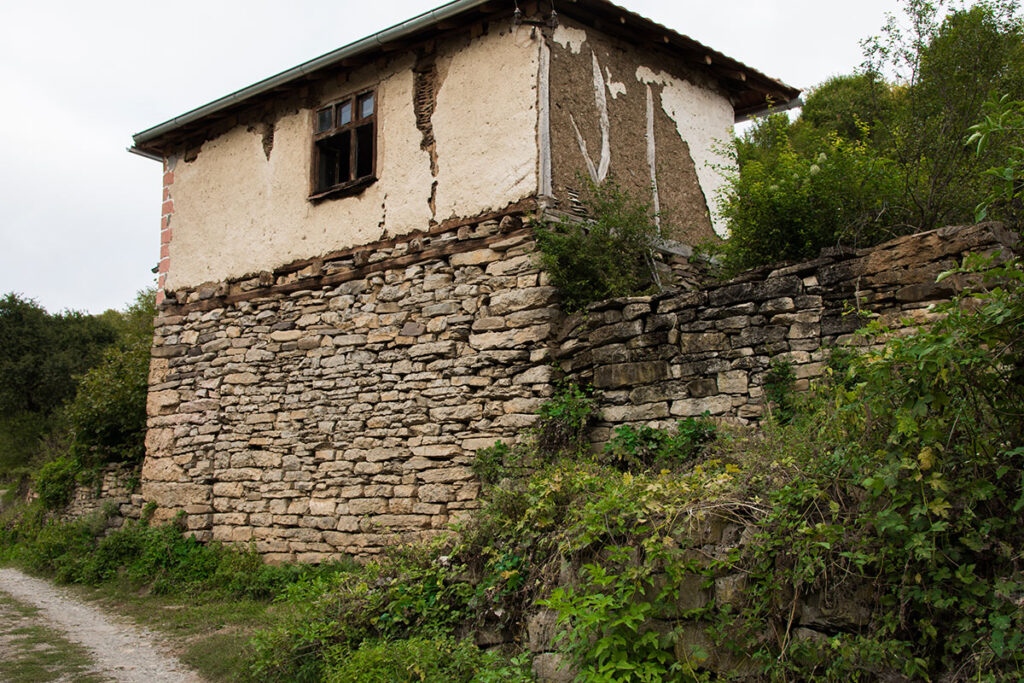
Gostuša, for all its emptiness, sits at the intersection of these shifts. The village has fewer than ten permanent residents, but it has something far rarer: clean water, unbroken landscape, and a silence dense enough to feel physical. A generation ago, that silence meant loss. Today, it’s starting to sound like opportunity.
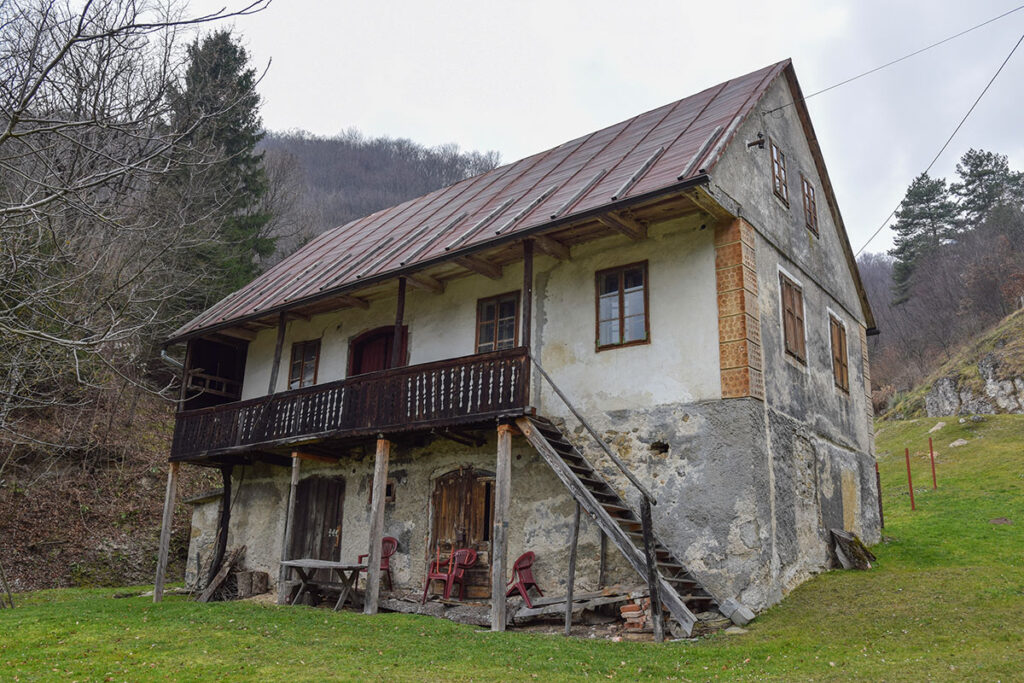
The same logic is unfolding across the region. In Croatia’s Žumberak, a cluster of highland villages once considered past the point of rescue now sit inside a protected landscape visited more by hikers than residents. The houses — wooden, modest, unmistakably local — were built for a life that doesn’t exist anymore. Yet their location, just an hour from Zagreb, has made Žumberak unexpectedly relevant. When a city pushes people to the edge with costs and noise, the edge starts to look attractive.
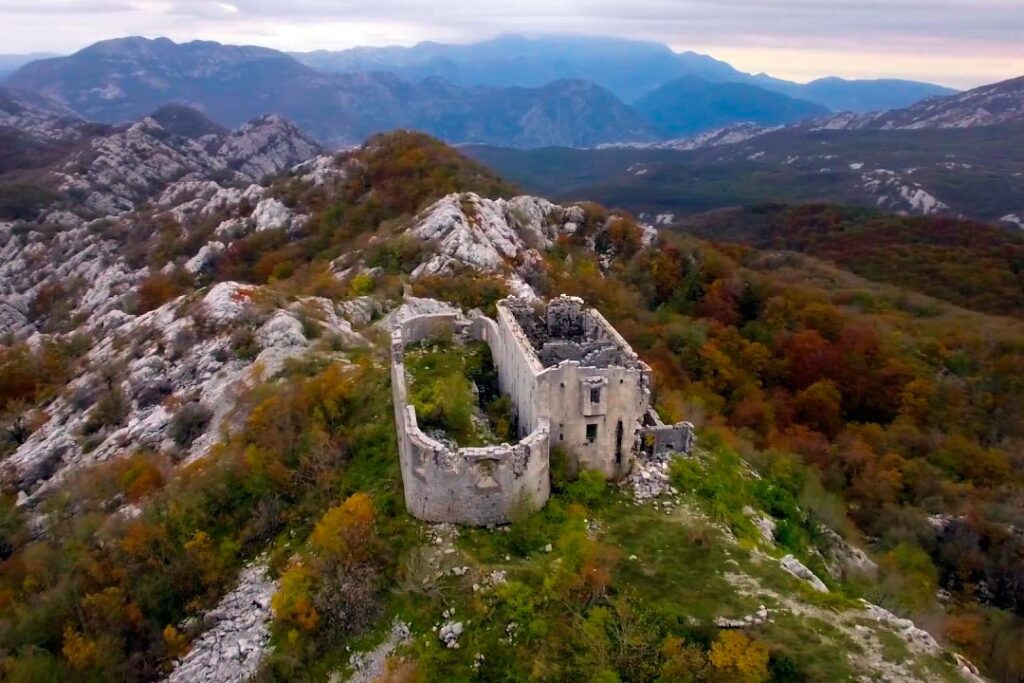
Even more revealing is what’s happening above the Bay of Kotor. Drive up the winding road from Perast or Risan and you reach Crkvice, once a bustling Austro-Hungarian settlement and now a scatter of stone ruins overtaken by grass and wind. The village is almost entirely deserted, but the location is staggering: a high plateau with clean air, open views, and a silence so complete it feels engineered.
Crkvice has no curated tourism, no restored façades, no commercial pitch. And yet its very absence of development is what makes it valuable. In a coastal economy saturated with overbuilt apartments and rushed investment, this abandoned settlement stands out as one of the last places where authenticity hasn’t been edited for visitors. It is a reminder that the region’s most compelling assets are often the ones no one has tried to monetise — yet.
None of this means rural rebirth will resemble the past. The old model — families tied to land, local schools full, life revolving around agriculture — is not coming back. The demographics are too stark, the economic incentives too different. But something else is emerging, slower and quieter, driven not by nostalgia but by exhaustion with the alternative.
Remote work finished rewriting the rules. A software engineer in Vienna no longer needs Vienna. A designer in Belgrade doesn’t need Belgrade. A startup team from Copenhagen doesn’t need Copenhagen. What they need is time, affordability, perspective, and the freedom to shape their days. For many, those ingredients aren’t found in cities anymore. They’re found in the places cities left behind.
Spend a morning in Gostuša and the logic is obvious. You can walk through a village built entirely from local stone — not as an aesthetic choice, but because that’s how people built before cement — and see the outlines of an economy that could exist again: small creative retreats, climate research outposts, regenerative agriculture, nature-based tourism that doesn’t feel manufactured. The infrastructure is thin, but the raw assets are extraordinary. Europe will eventually notice.
Žumberak offers a glimpse of what happens when it does. In the past two years, young couples, remote workers, and weekend migrants from Zagreb have begun to trickle into the area — quietly, without slogans or initiatives. One couple restored a wooden house that had been empty for twenty years. Another turned a barn into a minimalist workshop. A third uses their grandmother’s abandoned home as a base for a start-up that creates outdoor products. There is no “movement,” but something is moving.
Crkvice, by contrast, shows the beginning of a different path: selective reinvention. Not mass tourism, not gentrification — but a slow awakening to the fact that land this beautiful, this unspoiled, this close to the coast, will not stay invisible forever. Investors may eventually arrive. The hope — and the test — will be whether they understand that the value of the place is precisely in what it hasn’t become.
Experts, when asked, tend to describe this moment as “transitional,” a euphemism for uncertainty. But the uncertainty is the point. Rural decline was once considered irreversible. Now, its reversibility depends less on policy than on imagination. The question is not whether villages will return. It’s what form they will take when they do.
They may become places of intention rather than inheritance — chosen rather than inherited, shaped by people who arrive not because they must but because they can. People who want less noise, more meaning, and the ability to build something in a world that increasingly feels built-out.
A century from now, demographers will still talk about the great rural exodus. But they may also speak of a quieter counter-movement — the moment when empty villages stopped being treated as evidence of decline and started being seen as Europe’s rarest resource: the last expanses of possibility.
Stand in Gostuša at sunset and you understand it instinctively. The light slips across the valley, catching the stone walls in a way that makes them look almost deliberate in their endurance. There is no traffic, no background hum, no reminder of the world beyond the ridge. Just the architecture of a life that paused — and the outline of a life that could begin again.
