How Serbia’s state power utility is reshaping its role in the energy transition — from renewables and storage to long-term system resilience.
Europe’s energy map is being redrawn in real time. Prices swing, politics shift, technologies leap ahead faster than regulatory systems can keep up. For Serbia — a country still anchored in coal yet aiming for a clean-energy future — the transition demands a rare combination of speed, discipline and long-term vision.
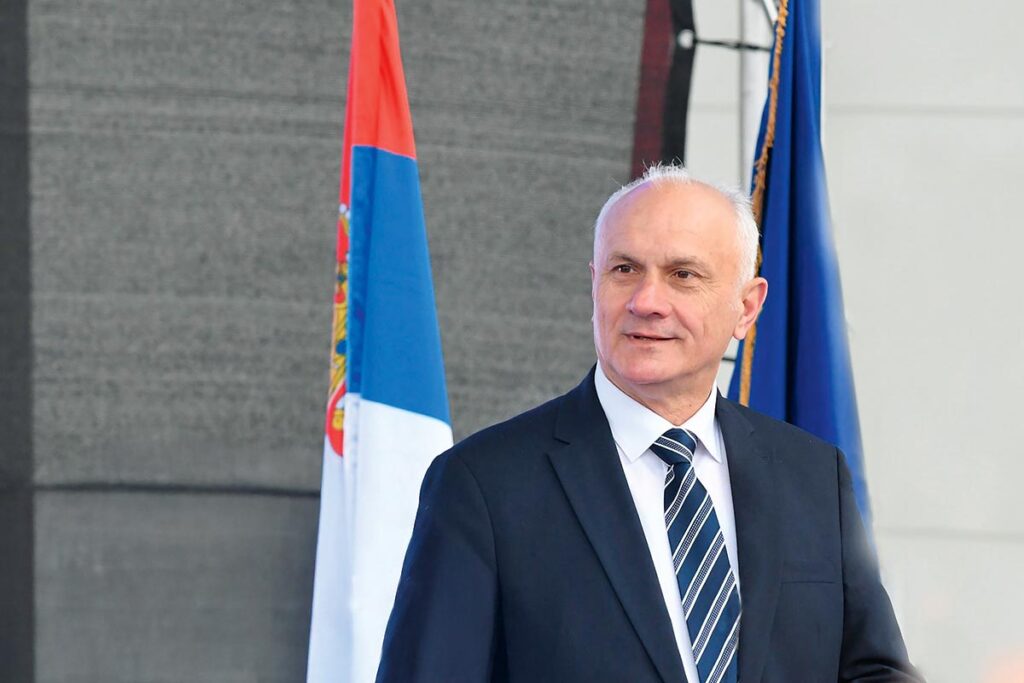
Few institutions sit at the centre of that challenge as squarely as EPS, Serbia’s state power utility. And few executives have inherited a more complex mandate than General Manager Dušan Živković: keep the lights on, decarbonise an entire system, modernise a legacy company, and do it in an era of volatile financing and rising geopolitical pressure.
In a conversation with The Region, Živković lays out what it really takes to pull off an energy transition that is both ambitious and realistic.
Energy security has become a defining question for Europe. Where does Serbia stand as CBAM, decarbonisation and new market pressures accelerate?
In this decade, energy security stopped being an abstract policy goal and became the single most important guarantee of national stability. Serbia is no exception. Our responsibility is twofold: to honour the legacy of those who built this system, and to ensure that the next generation inherits one that is cleaner, stronger and more resilient.
EPS is entering this transition with a clear focus — diversifying supply and deploying new technologies at scale.
Decarbonisation and CO₂ pricing will reshape the entire economy, not just the power sector, and our investment decisions reflect that. By upgrading existing assets and building new renewable capacity, we are aligning Serbia with Europe’s long-term climate goals. Our commitment is simple: by 2030, 45% of Serbia’s energy must come from renewables — and EPS intends to deliver a major share of that shift.
Coal still dominates Serbia’s energy mix. Renewables are rising. Hydropower sits in between. What does that balance look like over the next decade?
The transition will not happen without difficult trade-offs — but it will also not happen without bold investment. EU alignment means we need far more green power in the system, which is why EPS is expanding its renewable portfolio faster than ever.
This year alone, we are adding 76 MW from new solar and wind facilities.
• The Petka solar plant is already operating.
• The 66 MW Kostolac wind power plant is now in trial operation.
But the centrepiece is Bistrica — a 650-MW pumped-storage plant that will anchor Serbia’s renewable integration. Without Bistrica, large-scale solar and wind cannot be reliably absorbed; with it, the system becomes stable enough to grow.
We are also developing a 1 GW solar project with a strategic partner, including 200 MW of battery storage — one of the most ambitious undertakings in the region.
Still, the reality is that coal will remain a transitional baseload source for some years, provided it is modernised. Gas has a strong stabilising role as well. And we believe now is the moment to begin shaping Serbia’s longterm position on nuclear energy. Decisions about the next 30–40 years must be made today.
EPS is transforming in parallel — organisationally, financially and operationally — so that by 2030, it operates as a modern, profitable, market-driven utility with corporate governance that matches Europe’s best.
In a region where every kilowatt carries political, economic and social weight, EPS is not just running a utility — it is attempting to rewrite the energy future of an entire country. Serbia’s transition will not be simple, fast or cheap. But as Živković makes clear, the only unacceptable option is standing still.
The transition carries a massive price tag. Where will the money come from, and how much support can EPS expect from financial institutions?
No utility in the Western Balkans can afford to compromise on security of supply or profitability. The challenge is to finance the transition while keeping both intact.
The answer is diversification — not only of energy sources, but also of funding sources. We need long-term, predictable financing conditions that match the scale of investment demanded by decarbonisation.
And we need deeper partnerships with international financial institutions and global technology providers.
This is not a one-country job. Decarbonisation requires a tighter alliance between utilities, financiers and innovators. With the right mix of capital and technology, EPS can secure energy stability for consumers — and position itself as a regional leader of the transition.
How central is regional cooperation to this vision?
Absolutely central. Energy systems do not stop at national borders, and regional projects are no longer a matter of convenience — they are a prerequisite for long-term stability.
Half a century ago, Serbia and Romania built Djerdap 1, followed by Djerdap 2 — projects that still power both countries today. That spirit of cooperation must return.
New regional megawatts are urgently needed, and building them together is far more efficient than building them alone.
The regional electricity market has significant potential. With shared expertise and coordinated investment, regional utilities can become the backbone of energy security for this part of Europe.
