Inside the Regional Giant Redefining Logistics, Distribution and Growth
For a company spread across three continents and operating in some of the most fragmented markets in Europe and Africa, predictability is a rare commodity. Yet in 2025 — a year shaped by rising costs, shifting consumer patterns, and persistent logistical pressures — Nelt Group delivered something unusually steady: growth.
The company expects to close the year at €1.5 billion in revenue, up 9% from 2024, extending a performance curve that has made Nelt one of the region’s most resilient private business systems. The momentum is no accident. It is the result of a long-term investment cycle — Uspon 2030 — a capital-heavy plan designed to rebuild the company’s infrastructure, expand capacity, and hardwire digitalisation into every layer of the business.
“Despite external challenges, we achieved a consolidated revenue increase of 9% compared to 2024,” said Darko Lukić, Nelt Group’s CEO. It’s a concise line, delivered without theatrics, but it captures a larger truth: Nelt is growing while many are merely coping.
A Regional Powerhouse That Keeps Stretching Its Borders
Nelt’s footprint today is far wider than the traditional definition of the Adria region. Serbia — its largest and most complex market — crossed the €1 billion revenue mark. The broader Adria zone, spanning ex-YU markets, Albania and Romania, posted a 16% surge, showing that regional diversification is no longer just risk management, but strategic opportunity. Africa, often the most volatile frontier for European companies, delivered 11% growth, reinforcing that Nelt’s long-term presence in Angola, Mozambique and Zambia is not an experiment but a stable expansion path. Recognition followed scale: SEE TOP 100, a benchmark list of major companies in Southeast Europe, once again placed Nelt Serbia among the largest, making it the only domestically owned private company in its category. In a region dominated by multinational structures, Nelt’s ability to hold that position signals not luck, but institutional stamina.
Building the Infrastructure of Tomorrow
If Nelt’s 2025 had a headline theme, it would be this: build first, benefit later. More than €30 million of the €400 million planned investment cycle has already been deployed this year — a decisive push into assets that will define the company’s next decade.
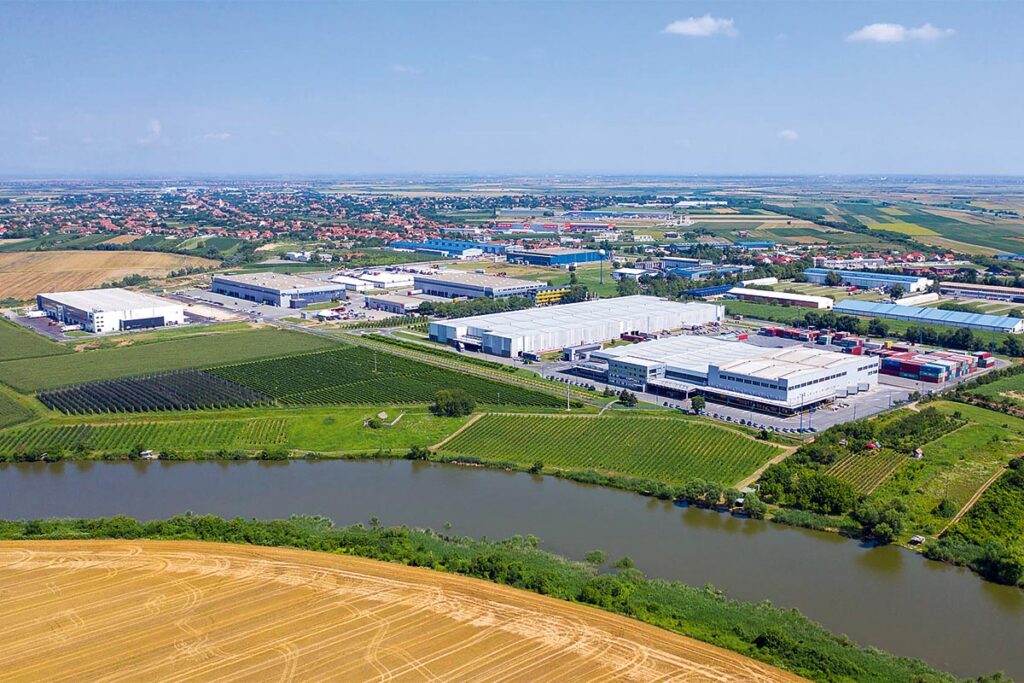
New, modern logistics facilities opened in Albania and Bosnia and Herzegovina, strengthening two critical distribution corridors. In Zambia, construction began on a business-distribution hub expected to serve as a long-term strategic anchor in Sub-Saharan logistics.
Inside the Baby Food Factory, newly installed production lines expanded capacity, enabling entry into new product categories and supporting a portfolio that continues to deepen its regional relevance.
Digitalisation — once a support function — has become a structural pillar. Platforms like SAP SuccessFactors and InfoNelt are reshaping workflow transparency, employee communication, safety compliance and decision-making. These are not glamorous investments, but they are the ones that separate companies built for the next decade from those built for the previous one.
Brands That Hold Their Ground — and Expand It
Across Nelt’s brand ecosystem — Baby Food Factory, Neoplanta and Chips Way — revenues rose 7%, accompanied by increased market share. The portfolio strengthened further with new distribution and logistics partners, including JTI (Albania), Beiersdorf (Zambia), Mondelez (Angola), Revlon (Serbia) and Bambi (North Macedonia).
For a company that operates across categories where consumer preferences and supply chains shift quickly, securing and integrating global principals at this scale remains one of its most durable competitive advantages.
People as a Strategic Investment — Not a Corporate Line
Many companies talk about investing in people. Nelt quantifies it. In 2025 alone:
• €6 million went into salary increases
• €1.5 million into additional employee benefits
• More than 5,500 hours into leadership training, skills development and capability building
In a system that spans Europe and Africa, talent retention and internal cohesion matter as much as capital expenditure.
Digital HR platforms now provide clearer communication, faster processes and cleaner organisational structure — features that directly influence why employees stay, evolve and contribute.
Nelt’s internal philosophy is straightforward: infrastructure, technology and portfolio strength mean little without a workforce capable of using them well.
The Road Ahead
As the company enters the final chapter of 2025, it stands as one of the rare regional players capable of shaping — not just responding to — the future of logistics, distribution and consumer goods in Southeast Europe.
The combination of infrastructure modernisation, geographic expansion, brand diversification and investment in people forms a strategic architecture that feels designed not for annual reporting, but for long-term positioning.
Uspon 2030 will determine how far this trajectory can reach. But the signals are already clear. In a year when many companies tightened their horizons, Nelt expanded its own — with discipline, with capital, and with the operational confidence of a system preparing for its next leap.
