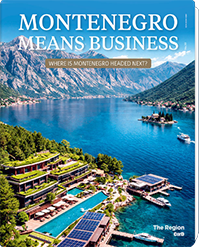
As Montenegro balances fiscal responsibility with the need for continued investment, Finance Minister Novica Vuković outlines how the country is stabilising its public finances, strengthening resilience, and laying the groundwork for sustainable growth — without compromising financial credibility.
How would you describe the current direction of Montenegro’s public finances — consolidation, stabilisation, or expansion?
Montenegro’s public finances are currently in a phase of stabilisation supported by determined consolidation. The Government is strengthening the revenue side of the budget, improving fiscal discipline, and increasing overall resilience, while at the same time supporting strategic investments essential for long-term growth.
This approach creates a solid foundation for sustainable development, strengthens the confidence of citizens and investors, and prepares Montenegro for full alignment with European fiscal standards.
What is the Government’s approach to managing public debt while continuing to invest in infrastructure and development?
The Government pursues a policy of responsible public debt management, carefully balancing sustainable borrowing with the financing of key development projects. The focus is on refinancing existing obligations under more favourable conditions, while directing investments toward infrastructure, green projects, and digitalisation.
These investments are designed to increase productivity and expand the country’s long-term fiscal capacity. The objective is clear: support growth without jeopardising financial stability.

Predictability is often cited as the most important factor for investors. How stable can Montenegro’s tax and fiscal framework be over the medium term?
Montenegro is building a stable and predictable tax and fiscal framework through clear legislation, modernised tax procedures, and harmonisation with EU standards. The Government’s objective is to ensure consistent application of regulations, transparent procedures, and a policy environment that supports sustainable investment.
For investors, this means reduced risk, clearer expectations, and a business climate focused on competitiveness rather than short-term adjustments.
How exposed is the state budget to external shocks, and where does Montenegro show the greatest financial resilience?
The budget today is more resilient than in previous years, supported by stronger fiscal reserves and a more diversified revenue base. Sectors linked to global trends, such as energy and tourism, remain more sensitive to external shocks.
However, through disciplined fiscal management, support for sustainable projects, and the gradual strengthening of domestic production, overall vulnerability has been reduced. Stable tax revenues and continued investment in public infrastructure provide an important buffer during periods of uncertainty.
Which fiscal decision taken over the past year best reflects the balance between discipline and growth?
One of the most important decisions was the adoption of a comprehensive package of financial reform laws, strengthening the tax system, banking sector, capital markets, digital resilience, and sustainable investment frameworks.
This package demonstrates that fiscal discipline and economic growth are not mutually exclusive. On the contrary, Montenegro is directing resources toward projects that increase long-term productivity while accelerating the country’s European integration.
