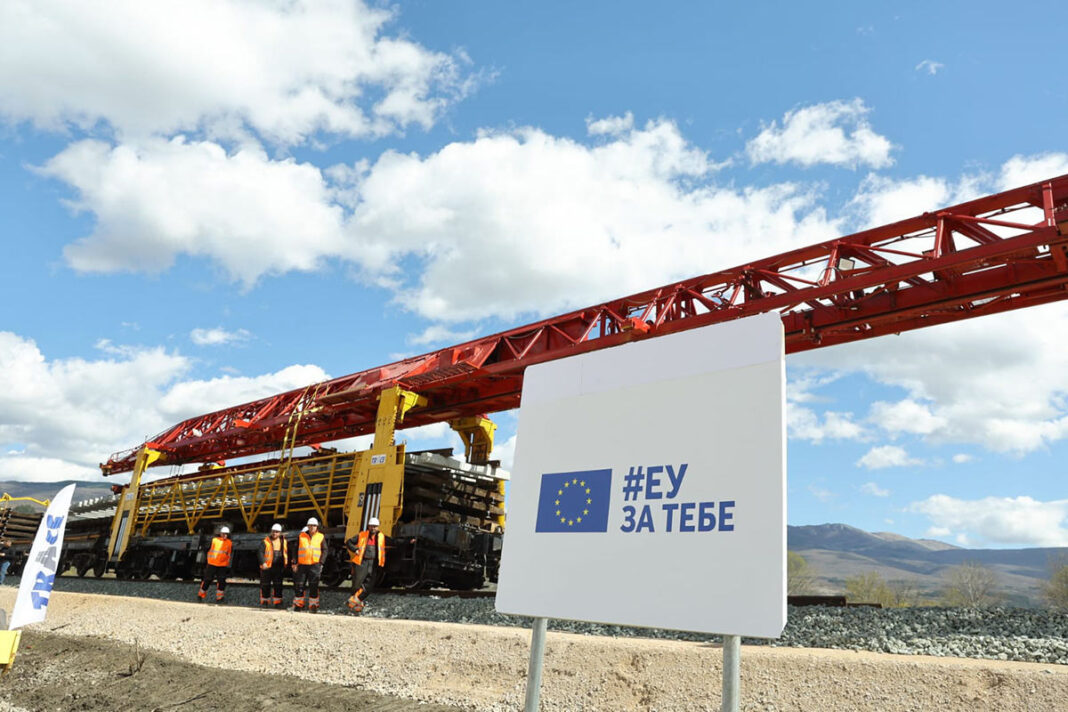
The European Union has committed €134 million to modernise, reconstruct and electrify the Niš–Dimitrovgrad railway, a strategic link between Serbia and Bulgaria. The package combines a €100 million loan from EIB Global with a €34 million EU grant under the Western Balkans Investment Framework (WBIF), targeting both line upgrades and a long-awaited rail bypass around Niš.
The financing will support the modernisation of the Sićevo–Dimitrovgrad section, full electrification and signalling along the Niš–Dimitrovgrad route, and construction works that ease congestion at one of southern Serbia’s busiest transport hubs. With these latest agreements, total EU backing for the section reaches €342 million, including €234 million in EIB loans and €108 million in EU grants, complemented by advisory support via JASPERS.
As part of Corridor X—within the wider Western Balkans–Eastern Mediterranean European Corridor—the project is expected to deliver tangible gains. Average speeds are set to rise from 50 km/h to up to 120 km/h, annual passenger numbers from 170,000 to around 550,000, and freight volumes from 3.2 million to approximately 6.2 million tonnes.
EIB Vice-President Robert de Groot said the project is “of critical importance for stronger economic integration,” noting it will improve reliability and availability of rail services while enabling a shift toward greener transport. EU Ambassador to Serbia Andreas von Beckerath highlighted the project’s role within Team Europe, strengthening regional connectivity and delivering long-term benefits for businesses and citizens.
Serbia’s Minister of Finance Siniša Mali underlined the corridor’s economic weight, calling the line “immensely important” for trade flows and for resolving the Niš junction bottleneck. Minister of Construction, Transportation and Infrastructure Aleksandra Sofronijević confirmed implementation began in late 2023, adding that the upgrades mark a crucial step toward electrifying the last non-electrified section of Corridor X and improving links to the TEN-T network.
Bottom line: faster trains, fewer bottlenecks, greener transport—and a sharper edge for regional trade.