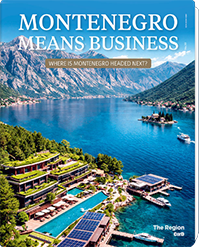
Lifestyle, flexibility and geography are quietly turning the country into a magnet for global professionals.
In the global competition for talent, the winners are no longer always the largest economies. Increasingly, they are the places that offer something harder to measure: quality of life, flexibility and a sense of possibility. Montenegro, a country of just over 600,000 people on the Adriatic coast, has quietly begun to benefit from this shift.
Over the past several years, it has emerged as one of Europe’s most attractive destinations for remote professionals, entrepreneurs and digital nomads. Rankings such as the VisaGuide Digital Nomad Index place Montenegro among the top global destinations for location-independent workers, reflecting a combination of lifestyle appeal, connectivity and accessible residency conditions.
Yet the story goes beyond remote work.
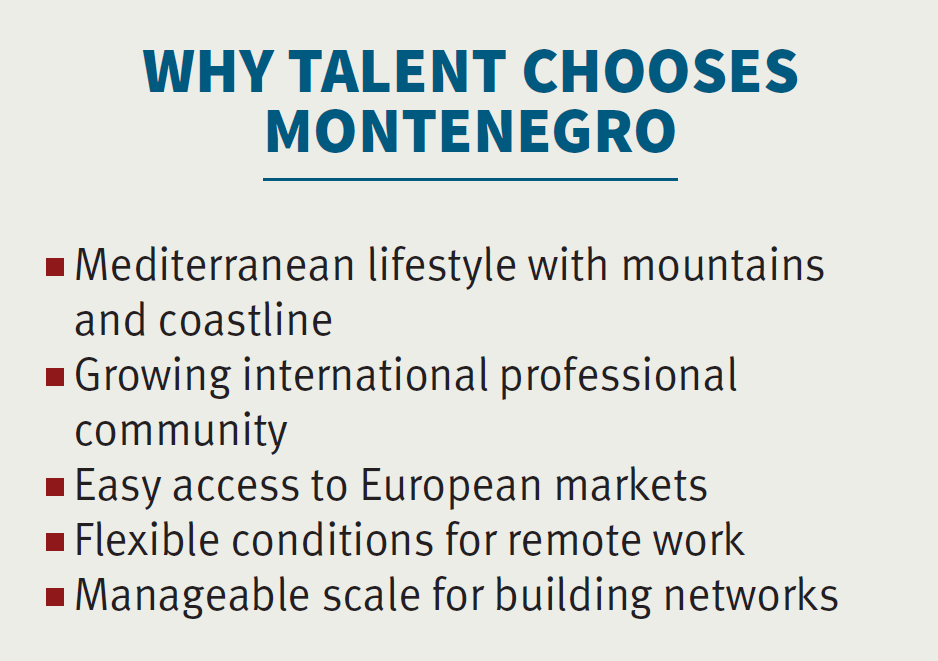
Montenegro is gradually positioning itself as a place where international talent can live, build businesses and connect with regional markets. For many professionals priced out of Western European capitals or seeking alternatives to crowded global hubs, the Adriatic offers a compelling balance: Mediterranean lifestyle, manageable scale and proximity to the European Union.
Geography plays a quiet role in this appeal.
Within a few hours’ drive, Montenegro offers mountains, coastline and historic towns alongside modern marinas and growing business communities. Cities such as Tivat, Kotor and Budva have developed vibrant international networks supported by residential developments, coworking spaces and hospitality infrastructure designed for longer stays rather than short holidays.
The country’s small scale also creates an environment where connections form quickly. Entrepreneurs, investors and technology professionals often find it easier to build networks than in larger markets where relationships take longer to develop.
This dynamic is already visible in the growth of new entrepreneurial communities along the coast. Technology founders, consultants and creative professionals are increasingly using Montenegro as a base while maintaining global clients and projects.
At the same time, Montenegro’s location places it within easy reach of several European markets. From the Adriatic coast, businesses can connect with Central Europe, the Western Balkans and the Mediterranean region within a short flight.
For younger professionals especially, the appeal lies in the ability to combine international work with a lifestyle that larger cities struggle to offer. What once looked like a peripheral market now feels, for some, like a strategic base.
This growing international workforce, however, also highlights the country’s structural challenges. Labour shortages persist in sectors such as technology, engineering and tourism, while rising demand places pressure on housing and infrastructure.
For Montenegro, the real opportunity lies in turning lifestyle appeal into long-term economic advantage. Countries that succeed in the global talent race combine quality of life with credible opportunity. Montenegro has already secured the first part of that equation.
The next step is ensuring that professionals who arrive for lifestyle reasons also find reasons to build companies, invest and stay.
Because in the modern economy, the most valuable resource is not capital or infrastructure.
It is talent — and the places people choose to call home.
