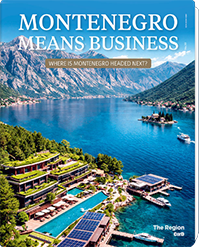
How digital voices are shaping business, tourism, and trust beyond the screen
A single post can now redirect travel flows, influence buying decisions, and shape how an entire country is perceived. What once required a coordinated campaign, a budget and institutional backing can today happen in minutes — driven by one credible voice and an audience that trusts it.
This shift has a name — the creator economy — but the label understates the reality. What’s emerging is not simply a new marketing channel, but a new layer of influence. One that operates outside institutions, budgets and official messaging, yet often proves more agile and persuasive than all three combined.
The most consequential digital voices today are not entertainers chasing attention. They are independent publishers, analysts, storytellers and explainers who have built something far more valuable than reach: credibility. Their power lies not in algorithms, but in trust accumulated over time — and in audiences that listen, act and remember.
In practical terms, this changes how impact works. A thoughtful travel creator can redirect demand from overcrowded hotspots to overlooked regions within days.
A business explainer can clarify complex reforms faster than official channels, reaching audiences that would never read a policy paper. A journalist-turned-creator can shape international perception long before formal narratives circulate. The effect is measurable not in likes, but in bookings, inquiries, investments, conversations and decisions.
For smaller markets and countries, this shift is particularly significant. Traditional nation-branding relies on scale, repetition and spend — three things smaller economies rarely have in abundance. Digital voices operate differently. They trade polish for proximity, slogans for context. When credibility is high, scale becomes secondary. One trusted voice can travel further than a glossy campaign precisely because it feels unfiltered and personal.
Montenegro sits at a delicate moment in this equation. Small in size but large in narrative potential, its global image is still being defined. In such environments, perception is shaped less by official strategy and more by lived storytelling — who tells the story, how consistently, and with what depth of understanding. Creators who engage seriously with place, history and responsibility can quietly influence how the country is discovered, discussed and remembered.
This power, however, comes with limits. The creator economy is volatile by design. Attention shifts quickly, incentives can distort judgement, and credibility — once lost — is rarely restored at the same speed it was built. The same velocity that amplifies influence can erase it overnight. Not every voice deserves amplification, and not every audience relationship translates into lasting authority. The distinction between noise and trust has never been more important.
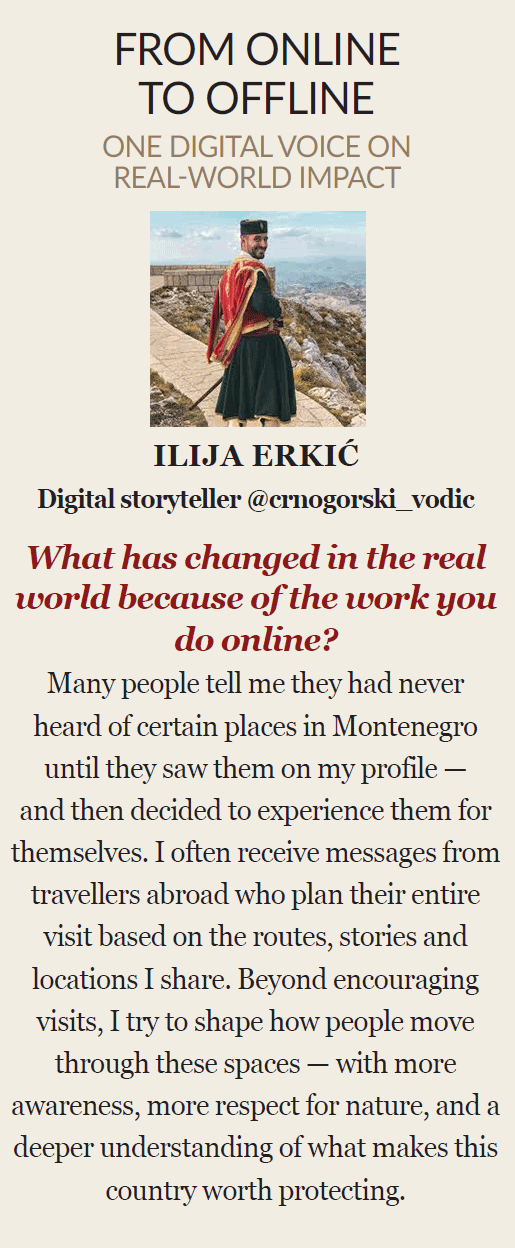
Still, the direction is clear. Influence no longer waits for permission. It does not require institutions to validate it. It accumulates where trust does — and travels wherever attention follows.
The most influential voices shaping economies, tourism and reputation today may never hold office or issue statements. But they already hold something more elusive: belief.
Yet the deeper change brought by the creator economy is not merely about visibility. It is about how authority is constructed.
For decades, economic narratives were largely shaped by institutions — tourism boards, ministries, investment agencies and major media organisations. They controlled the message, the timing and the distribution. Digital creators have not replaced those institutions, but they have altered the balance. Information now circulates in a far more decentralised environment, where credibility is earned individually rather than assigned by position.
This has quietly changed how countries compete for attention. A destination is no longer defined only by official campaigns or strategic branding exercises. It is defined by the accumulation of thousands of personal narratives — videos, travel diaries, business explainers and on-the-ground perspectives that together form a living portrait of a place.
In such an ecosystem, authenticity becomes currency. Audiences increasingly recognise the difference between a sponsored message and a genuine observation. The most effective creators understand this instinctively. They build influence not by promoting relentlessly but by interpreting — explaining what a place means, why it matters and how it fits into a wider story.
For Montenegro and other small economies, this dynamic offers both opportunity and responsibility. A country that invites thoughtful storytelling can amplify its voice far beyond its geographic size. But the opposite is also true: superficial narratives or careless promotion can quickly flatten complexity and reduce a destination to clichés.
The real challenge, then, is not controlling the story but participating in it — creating an environment where credible voices are able to explore, question and explain the country with depth.
Because in the digital era, reputation is rarely written in official statements. More often, it emerges gradually through the stories people choose to tell — and the ones others choose to believe.
