
A new philosophy in aesthetic medicine is quietly redefining how we think about age, beauty and confidence
For years, the beauty industry promised the same miracle: the power to erase time.
Creams, injections, lasers — the message was always the same. Aging was something to fight, to correct, to hide.
But a subtle revolution is now reshaping aesthetic medicine.
The new goal is not to look younger. It is to look better — naturally.
Across Europe’s most forward-thinking clinics, a new philosophy is emerging: age is not the enemy. Done well, aesthetic medicine should not change a face, but help it remain vibrant, expressive and unmistakably its own.
“The most beautiful results are the ones that don’t look like procedures,” says Dr Ioanna, founder of Ioanna Regen Clinic.
“People should look rested, confident and full of life — not altered.”
Her practice reflects exactly that shift.
Based in Belgrade, Dr Ioanna works with patients from across the region and regularly treats clients in Montenegro and Bosnia and Herzegovina, where demand for subtle, regenerative treatments has grown rapidly in recent years.
Many of her patients travel specifically for treatments that prioritise natural outcomes rather than dramatic transformation.
In this new aesthetic landscape, elegance has replaced excess.
REGENERATION INSTEAD OF TRANSFORMATION
The most important change in aesthetic medicine is happening beneath the surface of the skin.
Rather than forcing visible alterations, modern treatments increasingly stimulate the body’s own regenerative processes.
The focus is on improving skin quality — its structure, elasticity and vitality.
When skin becomes healthier, the face naturally appears fresher.
This approach, often called regenerative aesthetics, relies on biological signals that activate repair mechanisms inside the skin.
Instead of adding artificial volume, the goal is to encourage the skin to rebuild itself.
The effect is subtle but powerful: improved tone, smoother texture, softer lines and a healthier glow.
Not a different face — simply a better version of the same one.
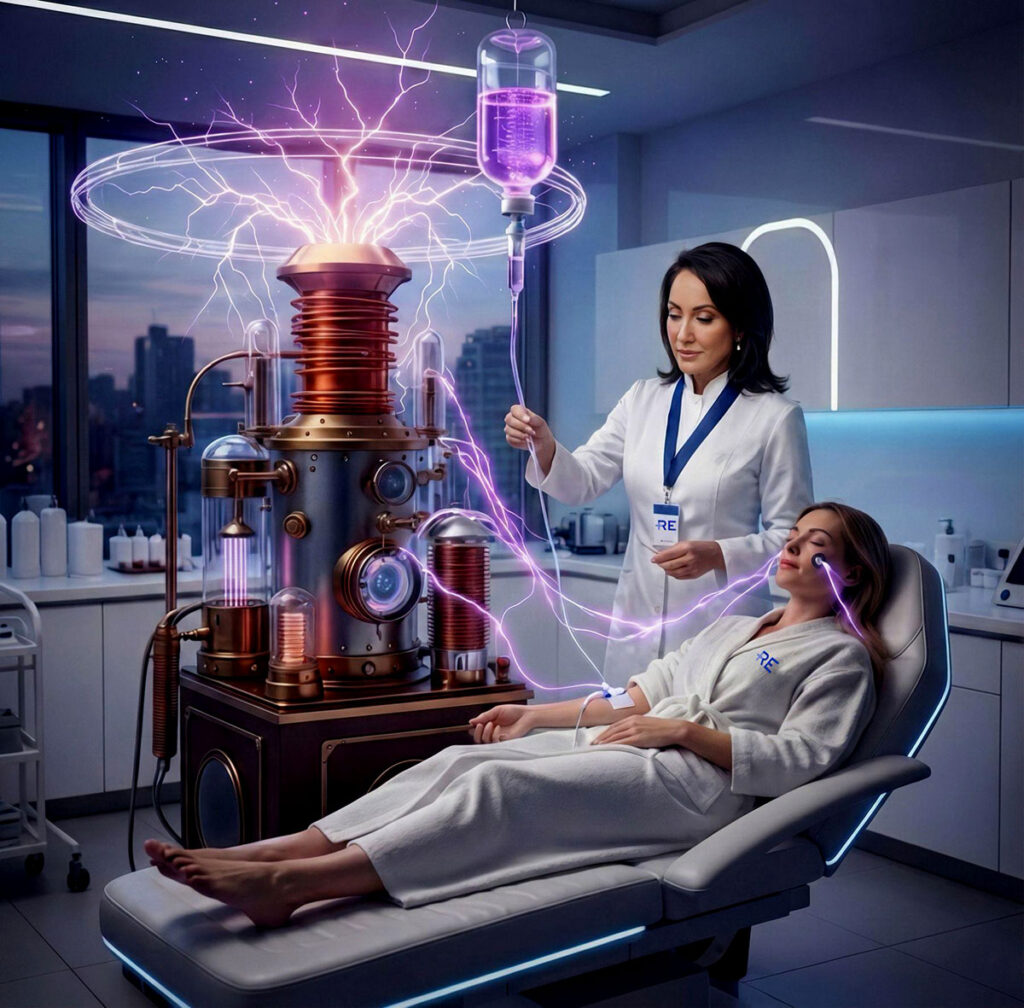
WHEN SCIENCE WORKS WITH NATURE
Among the treatments leading this shift is PRP (Platelet-Rich Plasma), one of the most established regenerative techniques.
PRP uses the patient’s own blood to isolate platelets rich in growth factors — biological signals that stimulate tissue repair and collagen production.
Once reintroduced into the skin, these factors trigger natural regeneration processes that gradually improve skin quality.
For many patients, the results appear as something difficult to quantify but instantly noticeable: a fresher, more rested appearance.
The skin simply behaves younger.
THE NEXT GENERATION: EXOSOMES
If PRP represents the foundation of regenerative aesthetics, exosomes are quickly becoming its most exciting frontier.
These microscopic biological messengers allow cells to communicate with one another, activating repair pathways and encouraging tissue renewal.
In aesthetic medicine, exosomes are used to improve skin texture, elasticity and overall radiance.
The process enhances the skin’s natural ability to regenerate, producing results that feel organic rather than artificial.
Patients often describe the outcome not as looking younger, but as looking healthier.
Today, aesthetic medicine is not about changing a face — it is about restoring the vitality the skin once had
REPAIR AT THE CELLULAR LEVEL
Another innovation gaining attention is the use of polynucleotides, bioactive molecules derived from highly purified fragments of salmon DNA.
Their role is to stimulate fibroblasts — the cells responsible for producing collagen and elastin — while improving hydration and reducing inflammation in the skin.
The effect is a deeper form of rejuvenation that strengthens the skin from within.
In practical terms, this means firmer texture, improved elasticity and skin that reflects light more evenly — small details that together create a more youthful appearance.
A NEW DEFINITION OF BEAUTY
Perhaps the most important shift in aesthetic medicine is philosophical.
For decades, the global beauty industry celebrated the illusion of eternal youth.
Today, many patients are asking for something far more sophisticated: confidence that evolves with time.
A face that still carries character.
A look that reflects experience.
“The most rewarding moment,” says Dr Ioanna, “is when someone tells a patient they look amazing — but can’t explain why.”
That quiet transformation is exactly what modern aesthetic medicine is learning to achieve.
Because in this new era of beauty, the goal is no longer to stop time.
It is simply to age beautifully.
And sometimes, that means fifty can indeed feel like the new thirty.