Founded in 1961, the (EDS) is the official student organisation of the European People’s Party, bringing together politically engaged students from across Europe to debate, draft, and influence policy ideas at the continental level.
Within this network, three young Serbian members—Aleksa Jovanović, Danilo Nastić and Petar Ivić, each from a different part of the country—are actively contributing to European policy discussions while strengthening Serbia’s visibility in youth political circles.
Their engagement reflects a broader shift: Serbian students are no longer observing European debates from the sidelines, but participating in them directly.
Finding a Place in European Debates
Aleksa, named Student of the Year at the Faculty of Political Sciences, University of Belgrade, for the International Relations programme in the 2024/25 academic year, describes EDS as a defining experience:

“It gave me access to serious political debates, high-quality events and a network of students who are already shaping Europe’s future.”
Danilo, from Čačak and a member of the Policies for Europe Working Group, highlights the organisation’s practical value:
“EDS provides a structured space for policy-oriented debate. It helped me grow not just academically, but as someone actively engaged in European affairs.”
For Petar, EDS combines substance with experience:
“It’s a mix of policy writing, networking and travel. Engaging with young leaders across Europe has been invaluable for both personal and professional growth.”
Policy in Practice: From Vienna to Barcelona
Participation in EDS events has taken all three across Europe, exposing them to diverse political contexts and real-world policy challenges.
Aleksa recalls a data-driven debate on social housing in Vienna:
“What stood out was the focus on concrete solutions, not abstract ideas. It changed how I think about European policymaking.”
Petar points to the EDS Summer University in Barcelona (2023), which focused on Catalonia and regional identity:
“We were forced to engage with questions of sovereignty and constitutional order—issues that resonate far beyond Spain.”
The Western Balkans in Focus
The most recent EDS event was held in Podgorica, bringing together young leaders to discuss EU enlargement, regional development and the Western Balkans’ strategic importance. Particular attention was given to Montenegro’s reform path and long-term initiatives such as positioning Nikšić as a European Capital of Culture by 2030.
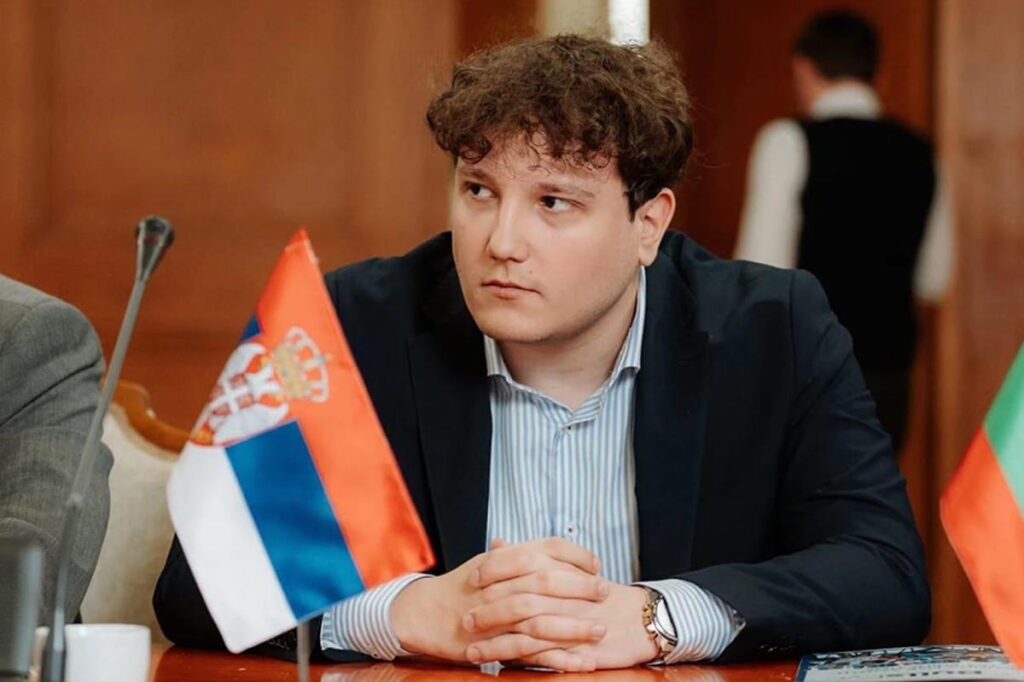
Danilo notes the relevance of the discussion:
“The focus on the Western Balkans was crucial. Enlargement was framed not as an option, but as a strategic necessity for the EU.”
Petar adds:
“Debating Montenegro’s political system and European future offered rare insight into how enlargement looks from inside the region.”

Working Groups: Where Ideas Become Policy
Much of EDS’s influence comes from its specialised working groups, which transform debate into policy proposals submitted to the European People’s Party.
Aleksa, a member of the Higher Education Working Group, explains:
“We focus on quality, accessibility and international competitiveness, while defending academic freedom and critical thinking.”
Petar contributes through the Economy and Technology Working Group:
“We examine macroeconomic stability, industrial competitiveness and technological innovation to strengthen Europe’s global position.”
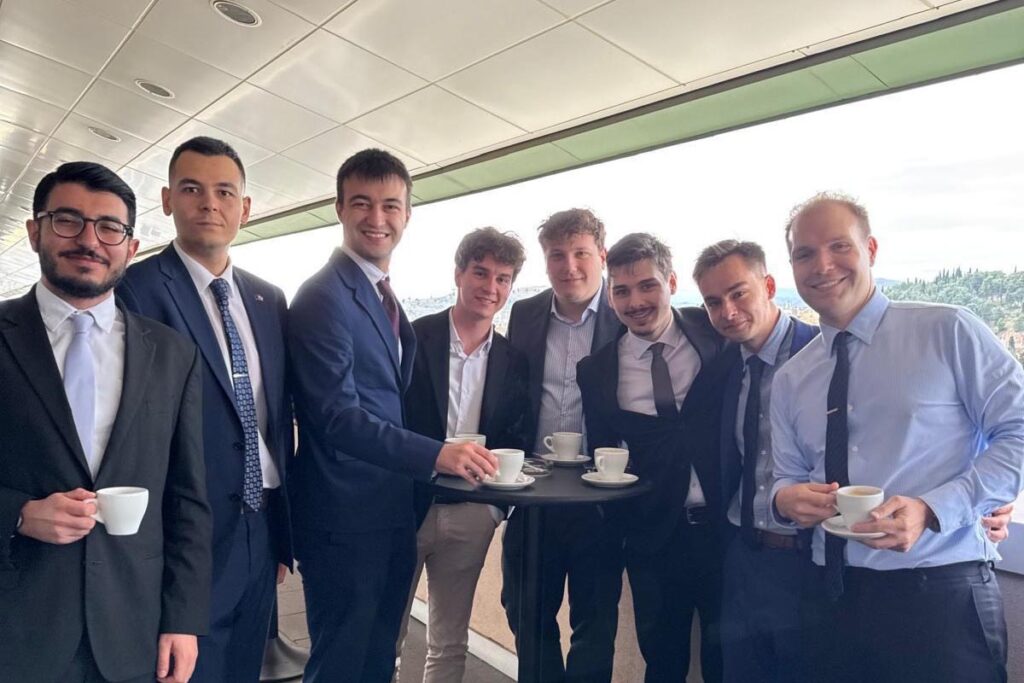
Danilo, in Policies for Europe, bridges debate and decision-making:
“Our role is to translate discussion into structured recommendations on enlargement, democratic resilience and crisis response.”
Linking Europe and Serbia: The Pupin Initiative
All three are also active in the Pupin Initiative, which focuses on Serbia–US relations and global positioning. Aleksa and Petar work as researchers and associates, while Danilo contributes as an intern.
Aleksa explains the complementarity:
“EDS shows me how Europe debates policy. Pupin helps me understand how those ideas can realistically work in Serbia.”
Petar adds:
“Serbia should never be diplomatically isolated. Engagement with the EU and international partners is essential.”
Education, Skills and Looking Ahead
All three earned their bachelor’s degrees at the Faculty of Political Sciences in Belgrade and are currently pursuing master’s studies—Aleksa and Danilo in US studies, Petar in global and strategic studies.
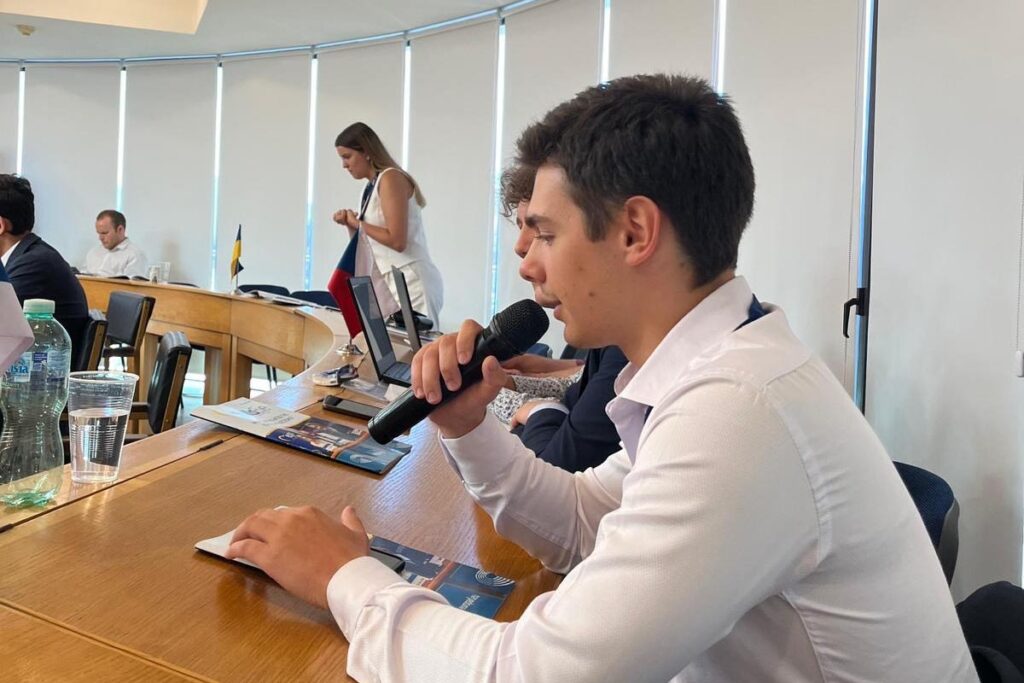
Participation in EDS has sharpened more than academic skills.
“Debating in multiple languages and environments strengthened my confidence and critical thinking,” says Petar.
“It taught me how organisations function internally and externally,” adds Danilo.
For them, EDS is not an end point, but a training ground.
“Student organisations are an investment in the future,” Petar concludes. “The results may not be immediate, but many of today’s participants will shape tomorrow’s policies.”